Restoration at Crow’s Hall
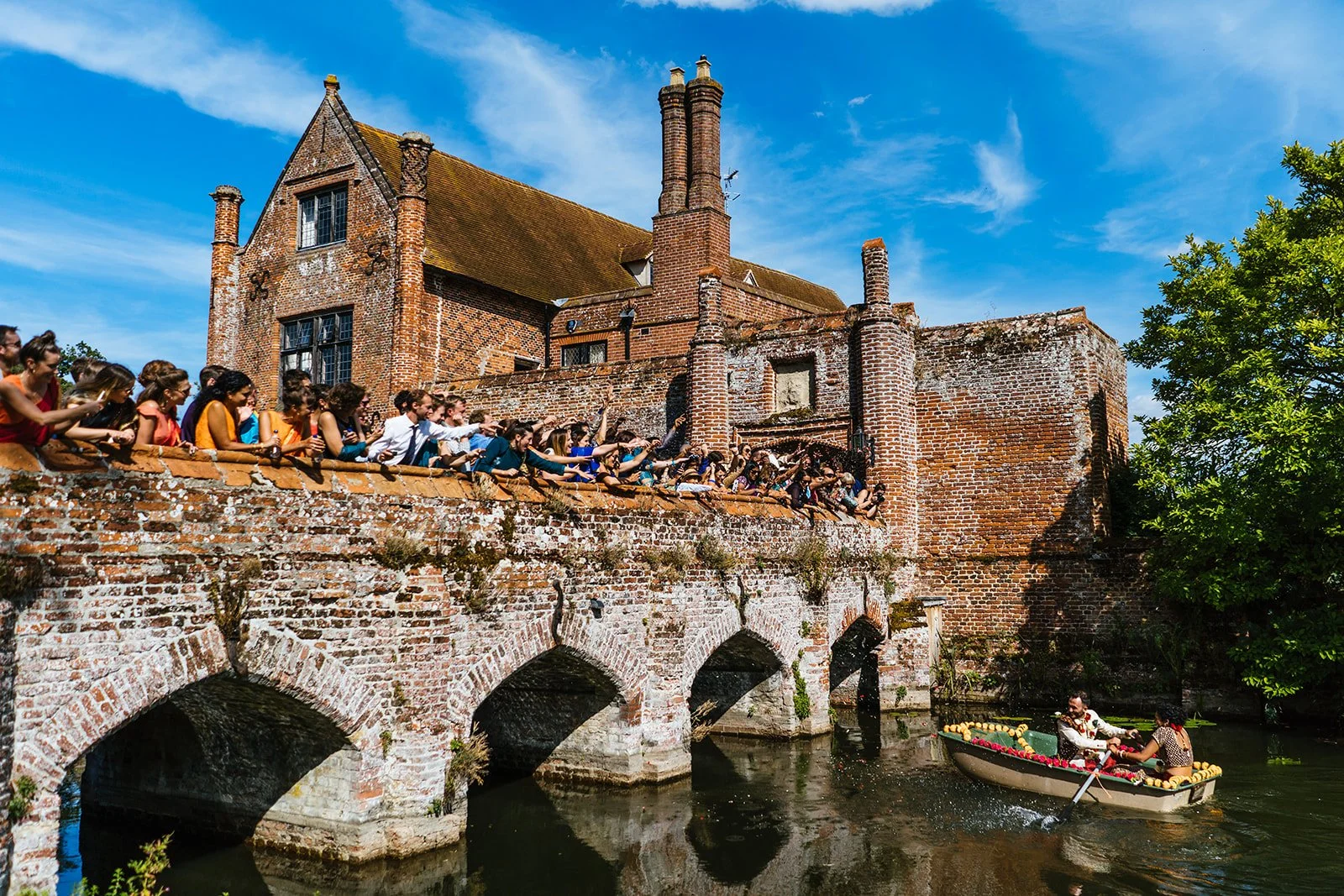
Guests watch the newly married couple rowing on the moat, with Crow’s Hall and its historic barn beyond – a setting shaped by careful restoration, renewal and the ongoing life of the estate.
The story of Boudicca and the barn
The last few years at Crow’s Hall have been rather stop-start, with some beautiful and spectacular weddings in amongst building repairs, renovations and a great many practical challenges along the way. Yet what has emerged is not simply a story of works and disruption, but one of restoration, stewardship and thoughtful renewal.

An aerial view of Crow’s Hall, with the Hall, gardens and surrounding moat revealing the beauty and structure of an estate carefully restored over recent years.
A PERIOD OF REPAIR AND RENEWAL
There have been closures, scaffolding and extensive works, some of them far more involved than first imagined, all part of caring for an old house, its barn and the wider estate properly.
Much of the recent plumbing and heating work was already reported over three editions in Suffolk Magazine last year, superbly installed by Suffolk engineers, Finbra Ltd. Some of the earlier renovation work from 2005 to 2008 had to be revisited, with secondary roof repairs and a complete replumbing and heating system tackled again for a second time in less than two decades. It has certainly not all been glamour.
Even before that, the barn itself had already been through an important chapter. In 2017 it was reroofed – rather romantic, really – with the 15th and 16th century granary largely intact, but now with a beautiful 21st century roof and stunning oak beams and supports, ensuring that any soaking is by Champagne only.
The barn at Crow’s Hall following its reroofing in 2017, preserving the historic granary while preparing the space for a new chapter of gatherings and celebrations.
THE BARN AT THE HEART OF IT ALL
That barn is very much at the heart of this story. It is 72 metres in length and thought to be the longest barn in East Anglia. It is listed, of significant historical importance, and for many years was mainly used for grain storage.
Attached to it was a redundant 1960s cattle shed, also used for grain. In time, both facilities became too small for modern machinery, and the maintenance of the redundant buildings was becoming a growing concern. Yet with the beautiful gardens, extensive grounds and the backdrop of Crow’s Hall itself, the barn was also becoming an increasingly popular setting for summer concerts and celebrations. One of the practical problems was how to heat it.
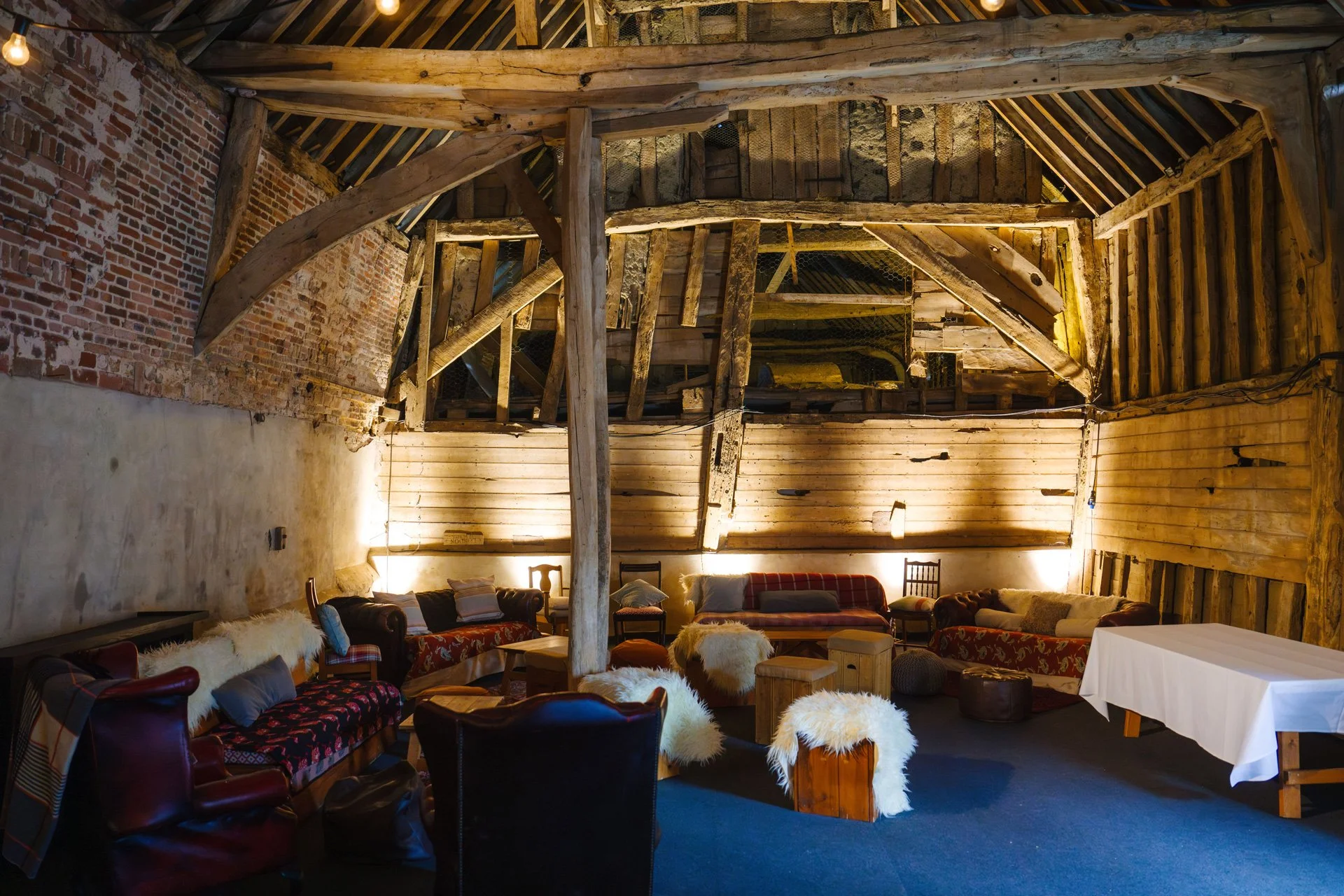
The barn at Crow’s Hall offers a wonderfully characterful setting, ready to be dressed and styled in a way that feels entirely personal.
Enter Boudicca
And that, really, is where Boudicca comes in.
The idea of a 200kW biomass woodchip boiler was introduced as both a greener and viable answer. New housing for the boiler proved cost prohibitive, even with the Renewable Heat Incentive, but using the redundant cattle shed made economic sense. Of course, that then left the farm with no grain storage at all. So one decision led to another, and gradually the master plan fell into place.
The biomass boiler – that’s Boudicca – could be housed in the redundant cattle shed, while a new grain store with dryer could be constructed. In one move, Boudicca could provide heat for the 16th century barn, the new grain dryer, and hot water and heating for Crow’s Hall and the two rental cottages as well.
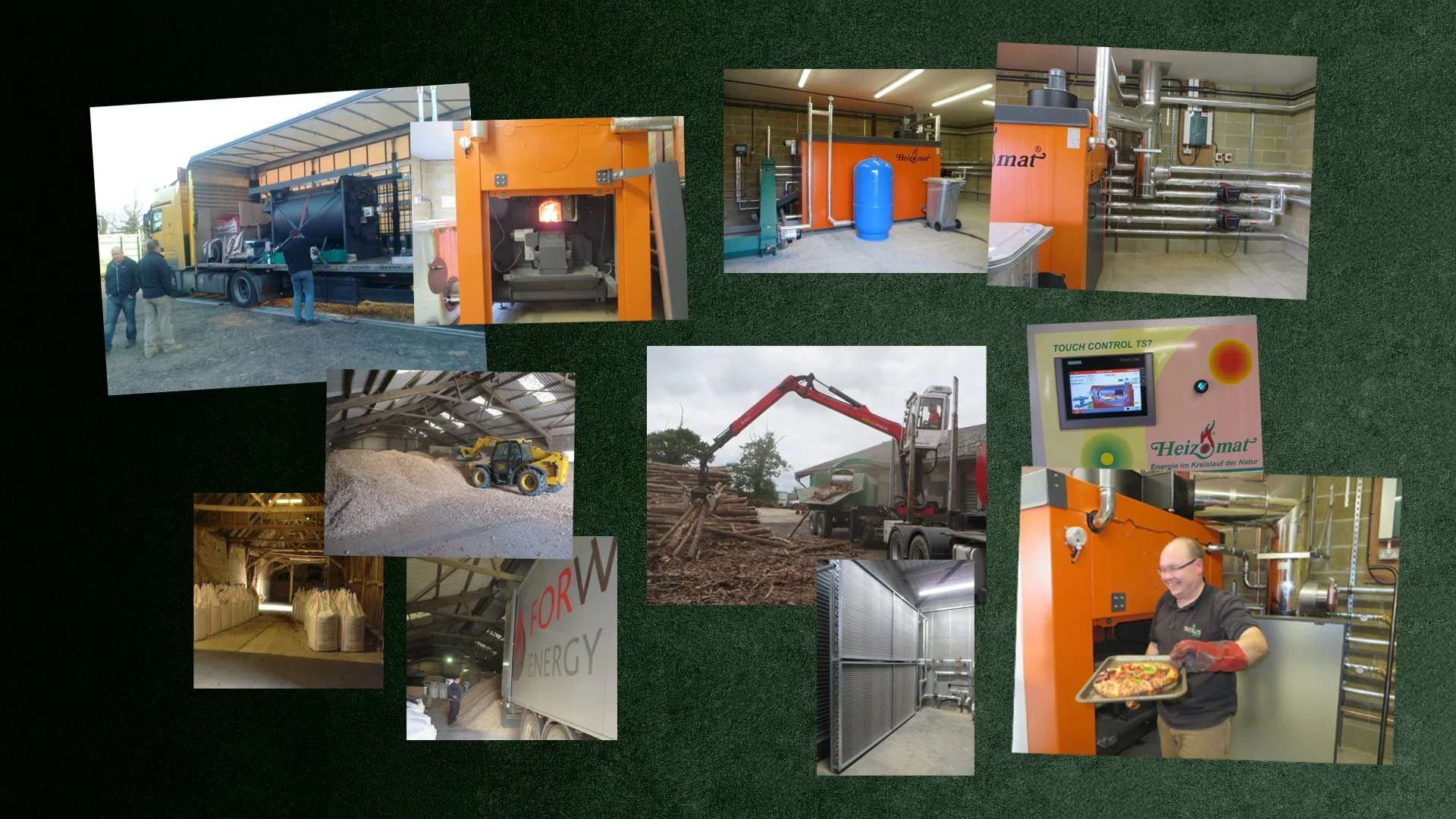
Boudicca’s installation and operation in pictures – from delivery and woodchip handling to boiler room, controls and the day-to-day running of the estate’s biomass system.
A PRACTICAL SOLUTION WITH A WIDER ROLE
Although costly, it was the idea that appealed most because its use was so diverse. It would support the working farm, the summer events at Crow’s Hall and three residential properties, without being financially dependent on any one of them. The RHI was a bonus, but not the deciding factor.
Work was completed by the end of 2014. Since then, Boudicca has quietly got on with the job, providing heat for the events barn, heat and hot water to Crow’s Hall and the rental cottages, and also serving the heat exchanger on the grain dryer.
For those who worry about waste, Boudicca burns through about 100 tonnes of woodchip a year, and the ash waste is not even enough to provide fertiliser for one of the flower beds in the garden. By the way, I am told she cooks rather good pizzas too.
A SCAPBOOK OF ONE LONG CHAPTER
Looking back through the photographs now, it all feels rather like a scrapbook of one long and winding estate chapter. There are pictures of the old barn before use for celebrations, and then later dressed beautifully for dinners and dancing. There are images of the boiler arriving, being installed and glowing into life. There are the new grain store and drying systems taking shape, the woodchip stores, the control panel, the pipes laid across the moat, and all the inevitable mud, machinery and moments of making-do that come with projects of this sort.
There are even one or two heroic efforts in the water to get things where they needed to go. And then, at the other end of it all, there is Crow’s Hall itself, the gardens, the drive and the sense of the estate carrying on, all the better for the work that had gone on behind the scenes.
In truth, this whole story began with trying to find the best way to preserve the 16th century granary. That was the starting point. It was never simply about putting in a boiler. It was about finding sensible, practical and sympathetic ways to care for old buildings, while making sure they could continue to serve both the estate and the people who come here.
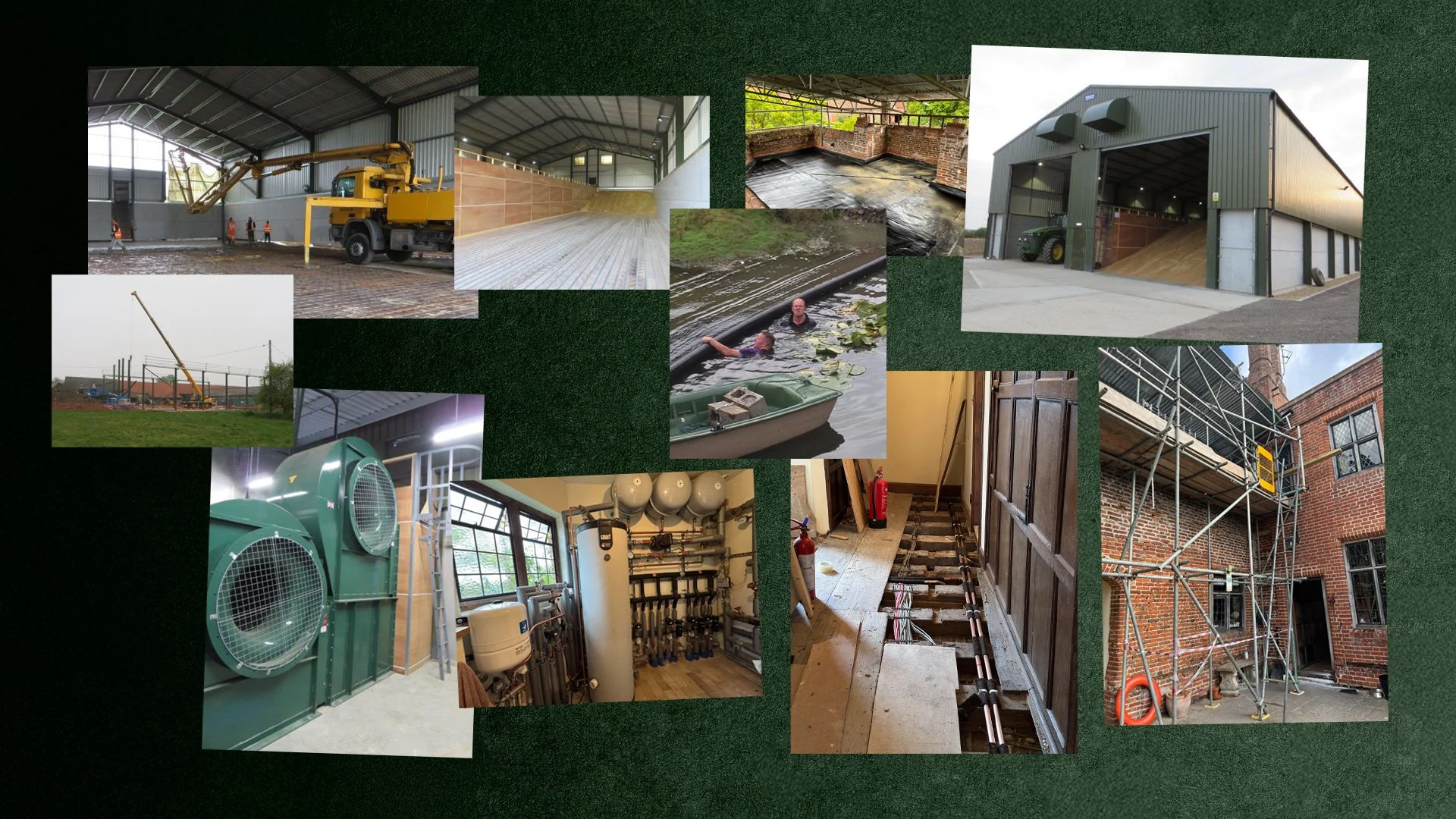
From grain storage and drying systems to scaffolding, services and repair works, these images capture the broader estate story behind recent years at Crow’s Hall.
A NEW CHAPTER
By August 2025, the latest phase of works had finally come together. The Hall was looking and feeling fresh and fabulous, the gardens had been transformed under the management of our wonderful head gardener, Olga Skavos, and her team, and we were able to host a festival wedding that had been rescheduled from another venue.
It was such an exciting week: a beautiful ceremony in the box-hedged amphitheatre, champagne in the garden, and then dinner and dancing into the night in the barn, with the marquee and glamping areas all ready and waiting.
Three weeks later came another wedding, also rescheduled from another venue and with not that many weeks’ notice. This one was much smaller – a glorious micro wedding rather delightfully slipped in. The Hall was ready and pristine, full of its 16th century character but with 21st century comforts, the gardens looked stunning, and with superb food over the weekend, Crow’s Hall became a little magical island oasis for a very special lifetime memory.
So yes, the last few years have involved repairs, replumbing, heating works, reroofing, closures, mud, machinery and a fair amount of persistence. But they have also been about something much more important: preserving Crow’s Hall properly. Looking after the barn, the Hall and the wider estate in a way that is practical, thoughtful and built to last.
A big thank you to everyone for all their hard work. A happy ending — and, one hopes, a very exciting new chapter.
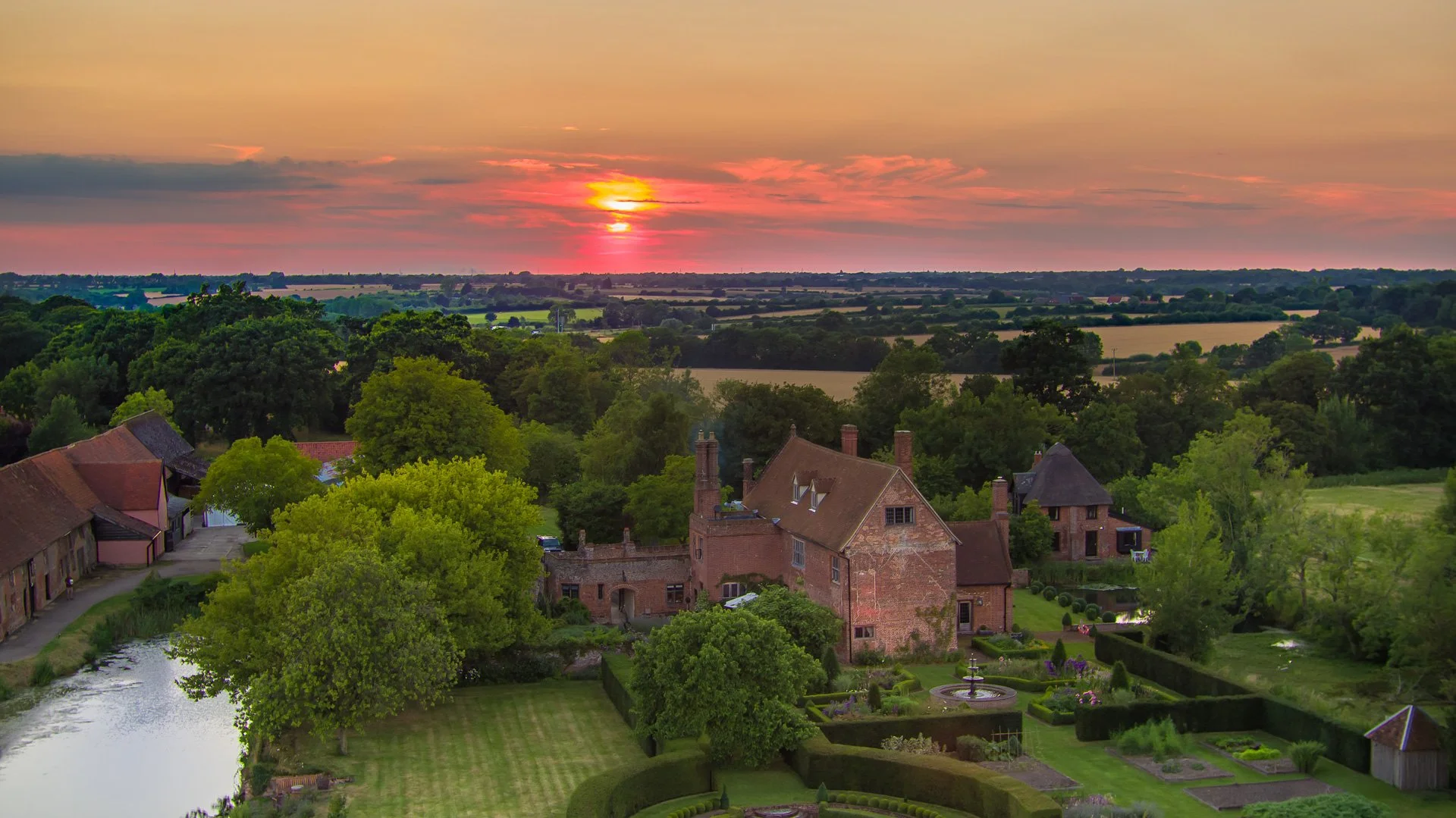
As the sun sets over Crow’s Hall, the Hall, gardens and wider estate speak to a place carefully restored, thoughtfully renewed and ready for a new chapter.