THE HALL
CROW’S HALL

A house held by water, gardens and time.
Crow’s Hall is first and foremost a private Suffolk home.
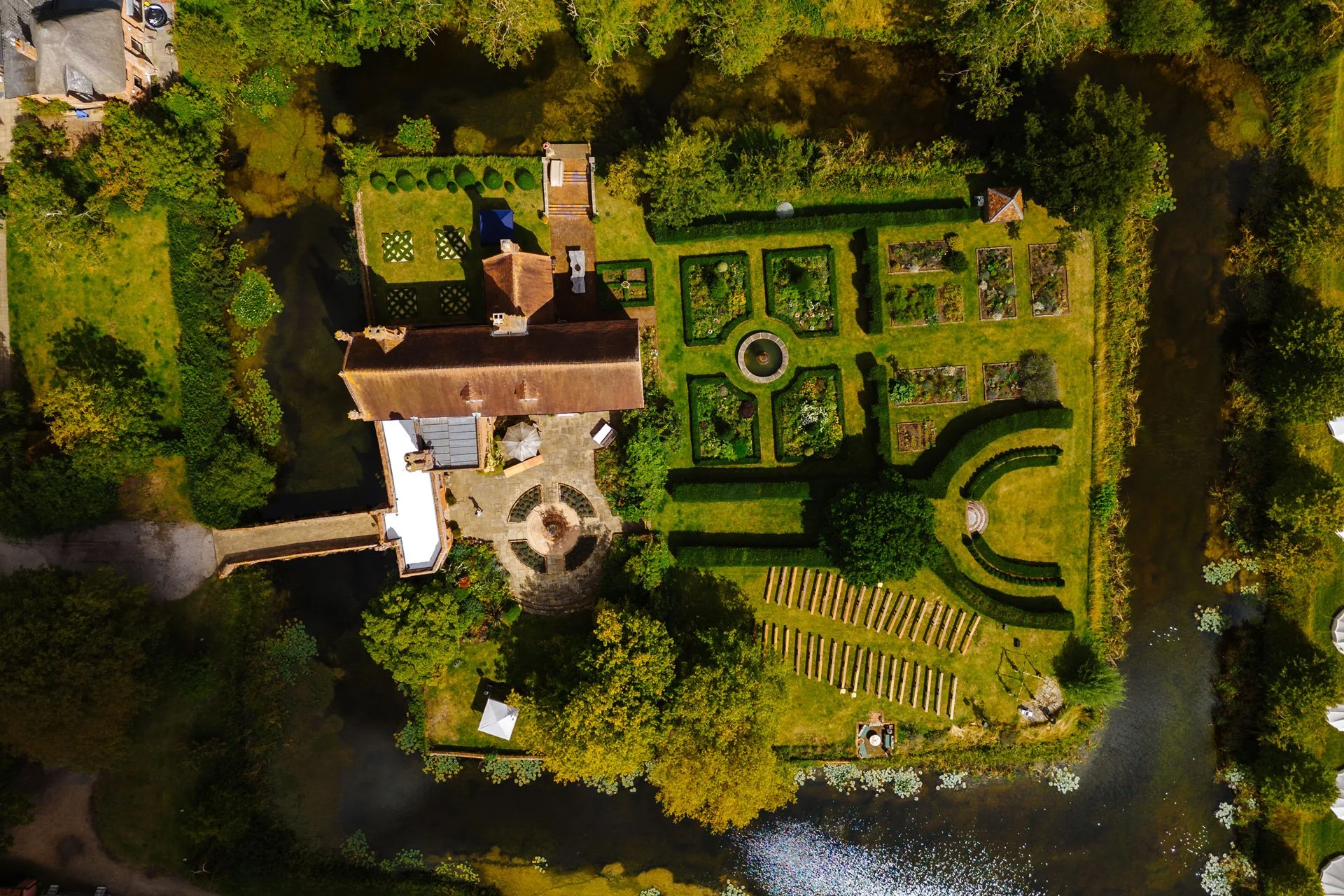
The moat is more than a feature of Crow’s Hall. It changes the way the place is experienced.
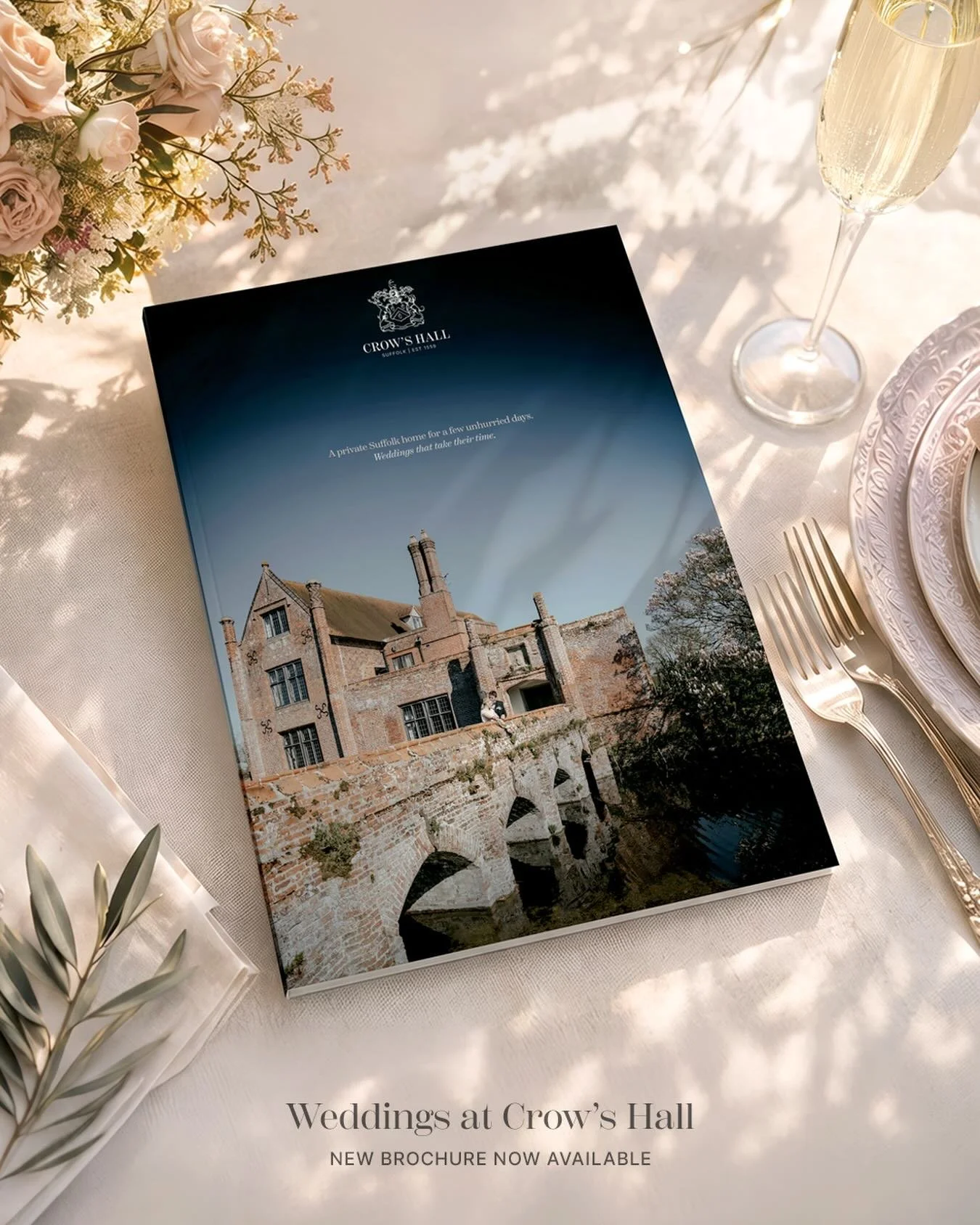
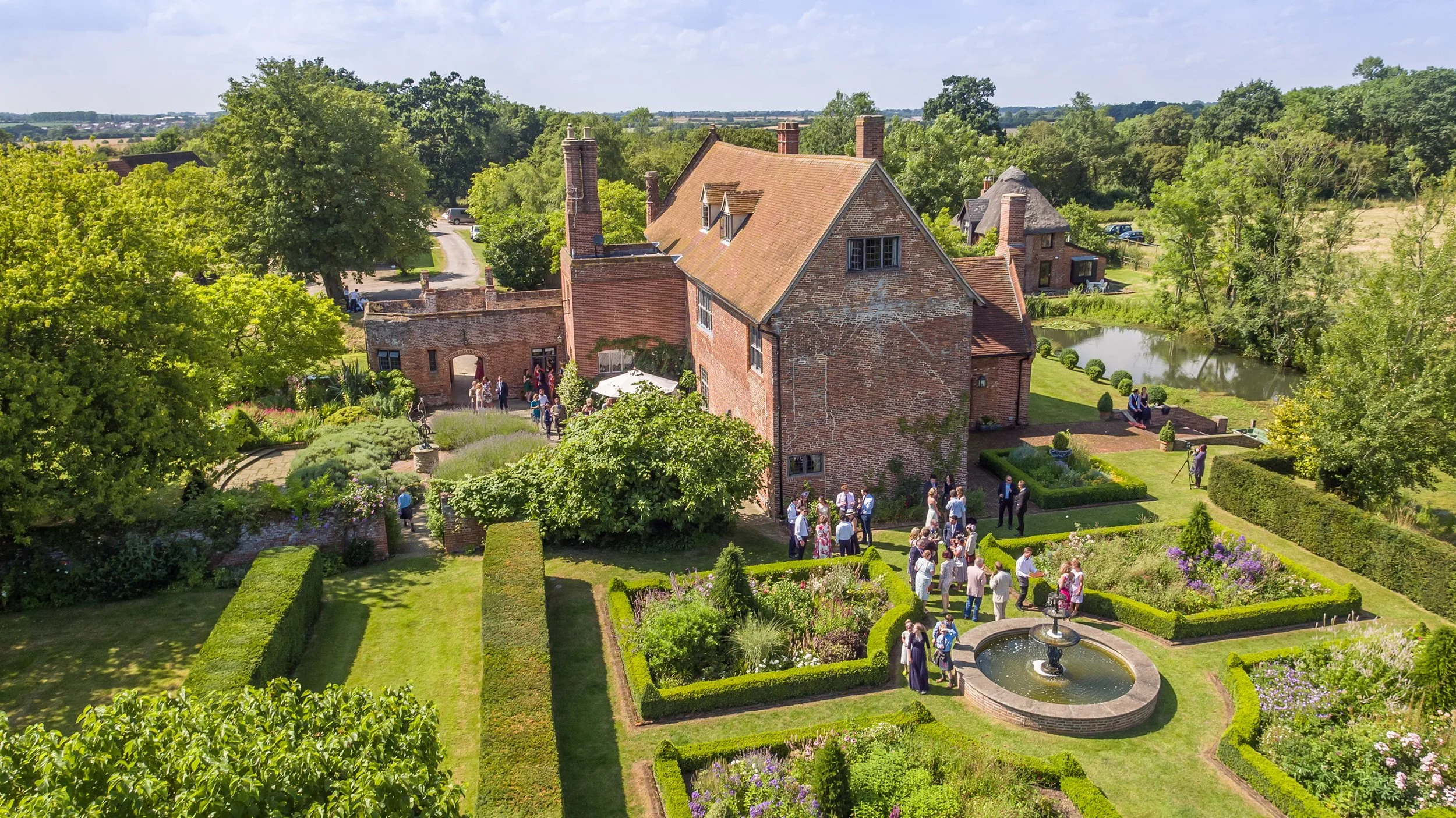
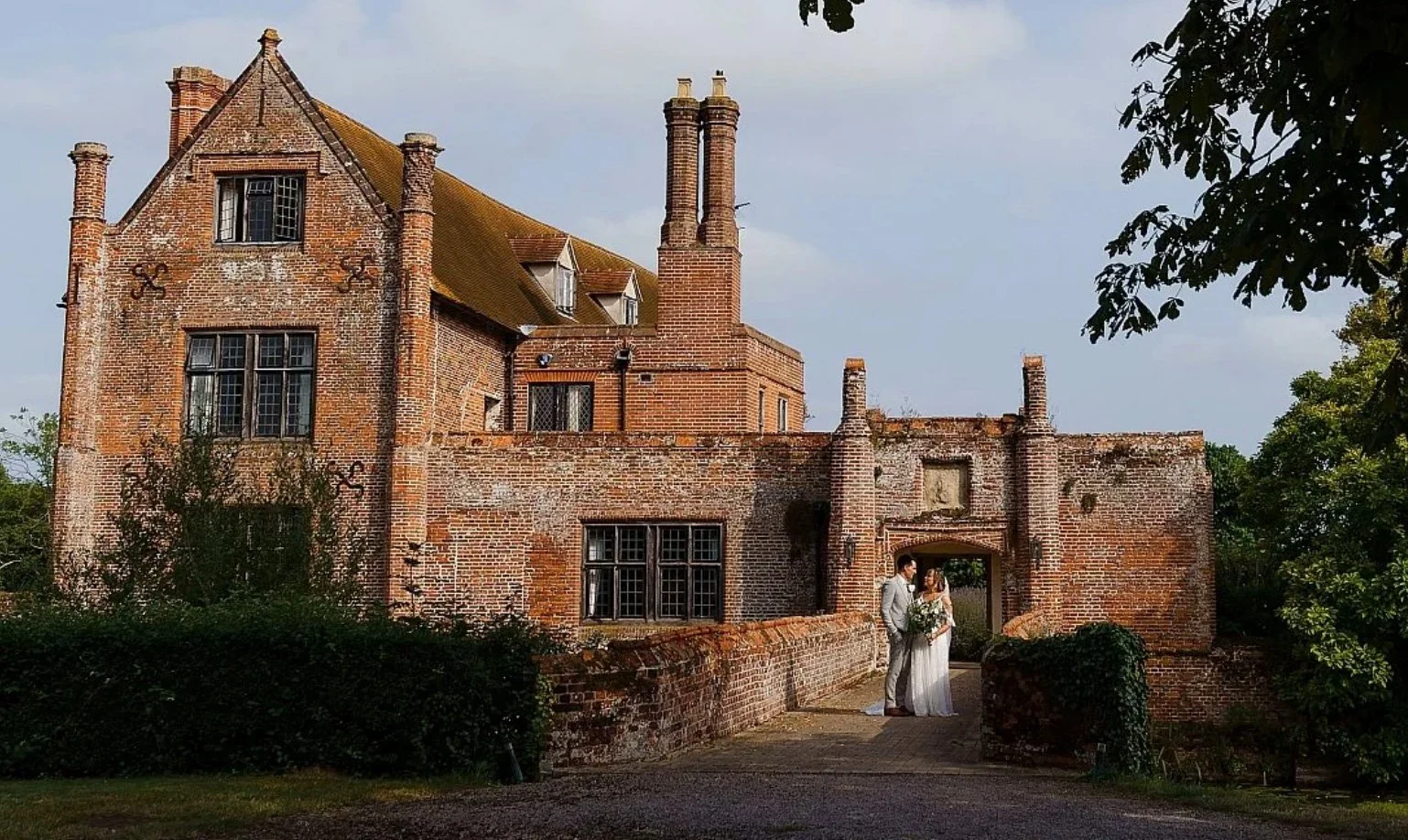
Built in 1559/60 for the marriage of Sir Charles Framlingham, the Hall has been known by name since the 14th century, and its wide, water-filled moat remains one of the estate’s defining features. It creates a natural pause before arrival: a sense that the house and gardens have kept their own rhythm while the world beyond has moved on.
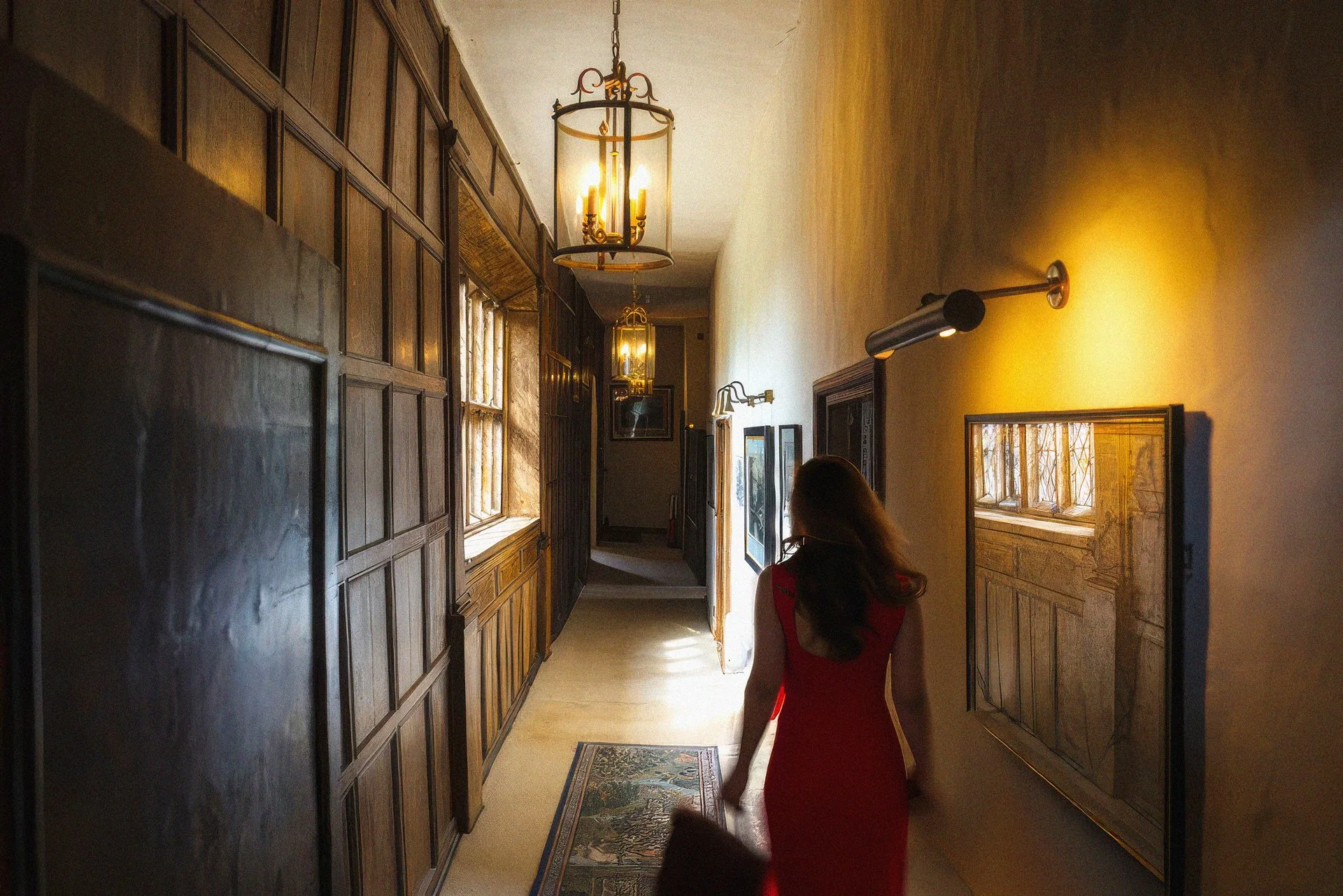
The present house is Grade II* listed and largely 16th century, with later repairs, losses and renewals all part of its story.
THE LANDSCAPE
A rare early country-house landscape.
Crow’s Hall lies in the claylands of High Suffolk, on ground rising gently from the River Deben to the east of Debenham. From the Hall and gardens, long views extend across the surrounding countryside.
Listed at Grade II* in 1955, the mid-16th-century manor house is surrounded by a wide, water-filled moat and entered across a brick bridge and through the redbrick gatehouse. Unlike many country estates, Crow’s Hall was never shaped by a single formal masterplan and remains an unusual survival of a small, early country-house landscape.
A second, narrower moat encloses the outer courtyard and a meadow that was once an orchard. Nearby, the double-row oak avenue known as The Walk includes trees between 200 and 300 years old. A 16th-century thatched dovecote stands between The Walk and the main house, while a former small moat called The Stews is now planted with oaks.
Garden rooms made from the house’s past.
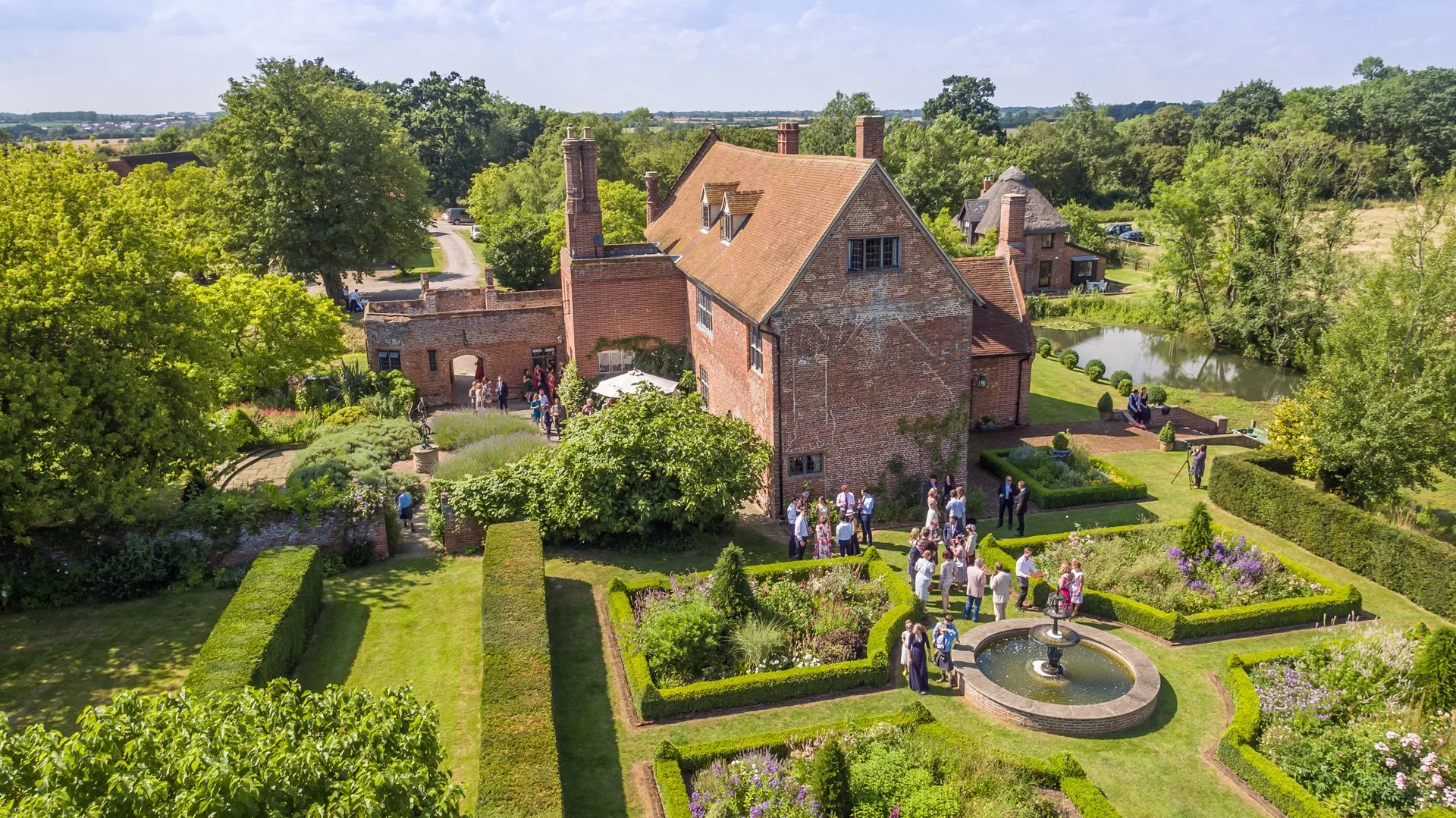
Within the moat, the gardens were designed in 2007 by Xa Tollemache as part of Caroline’s restoration of Crow’s Hall. They are partly formed on the foundations of ruined portions of the earlier house, allowing the lost structure to remain present in the landscape.
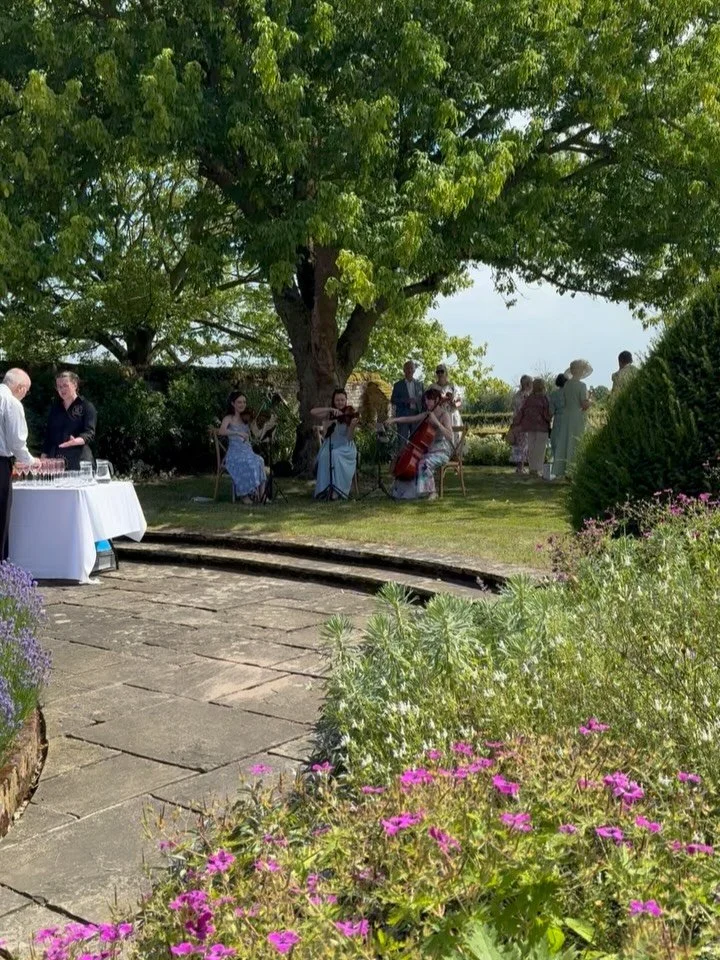
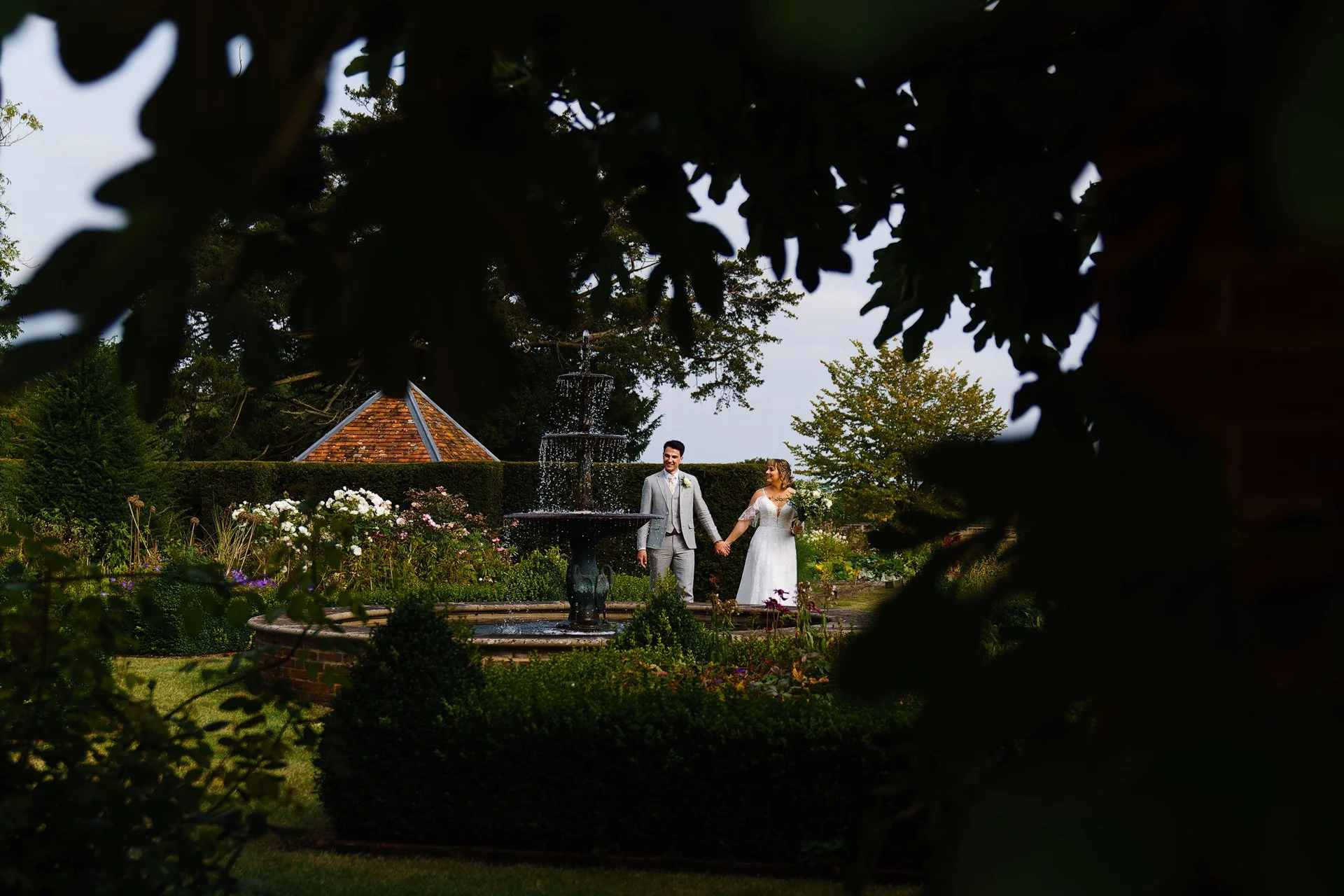
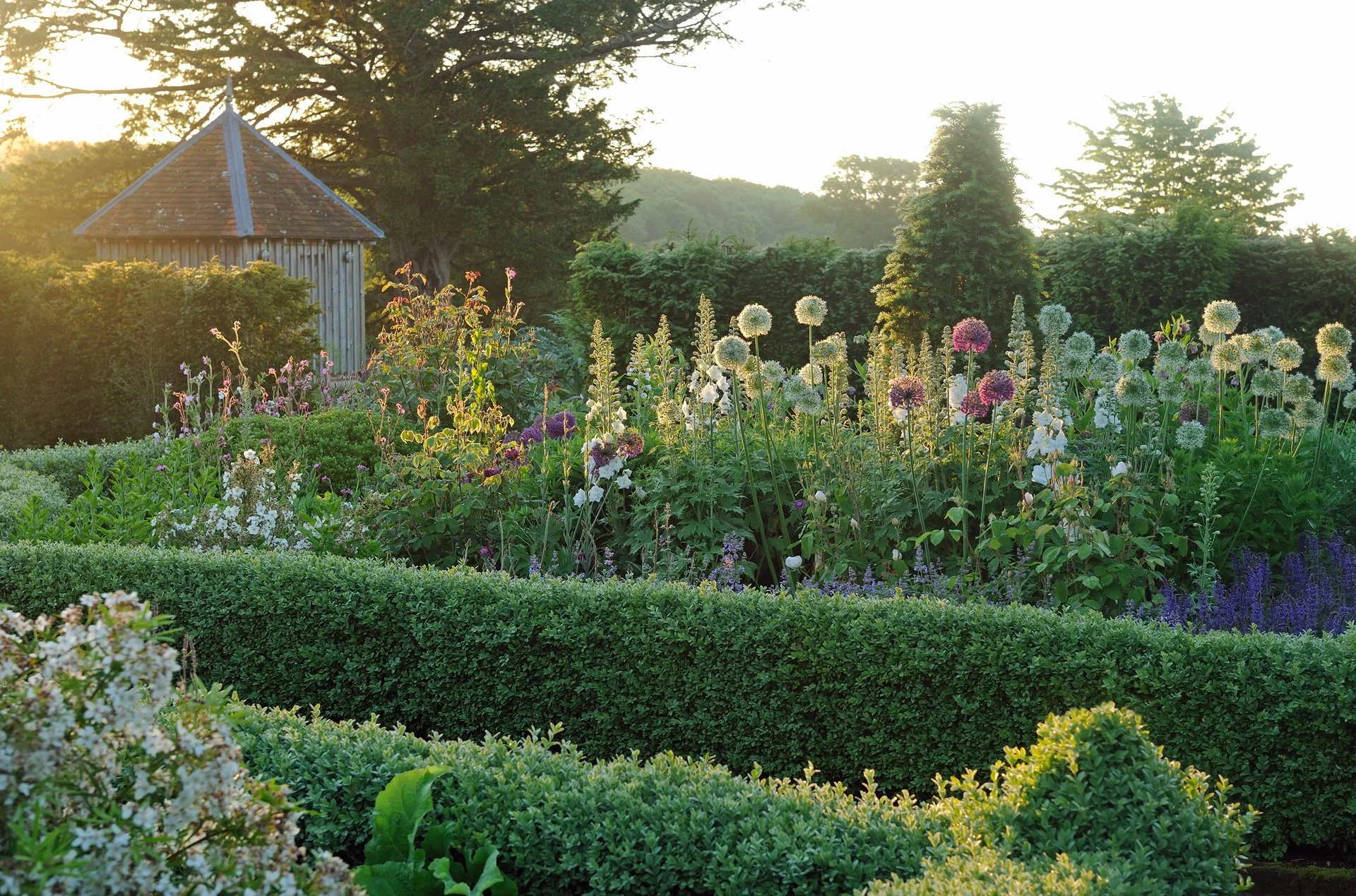
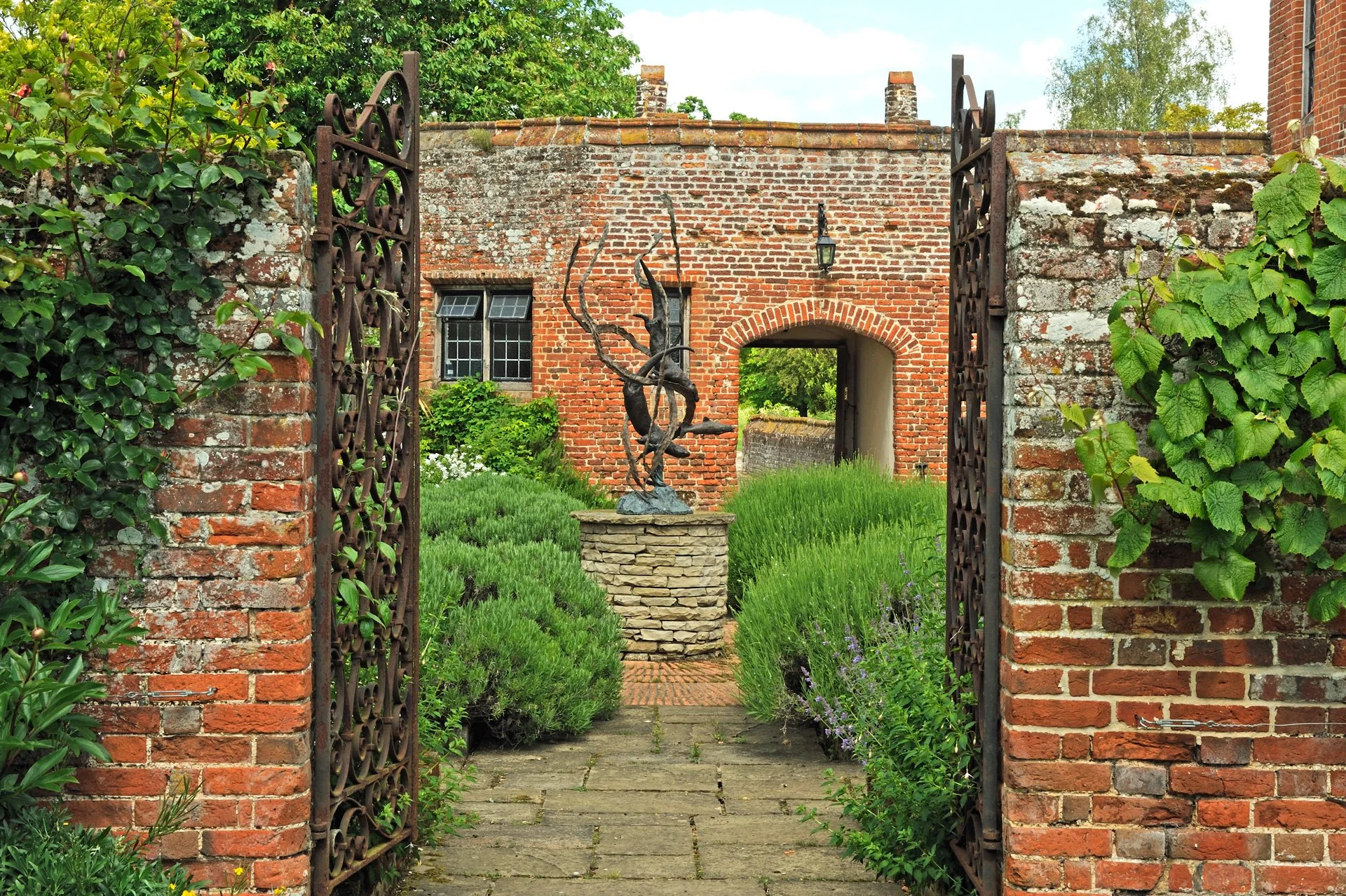
Created as a sequence of outdoor rooms, they include an island garden with old brick foundations used as walled flower beds, a miniature Tudor-style knot garden, a courtyard garden with circular paths and sculpture, and the Pool Garden, centred on a raised round pool and fountain.
The gardens belong closely to the Hall, but they have a character and story of their own: places for planting, water, ceremony, photographs, movement and pause.



CROW’S HALL
The Story of Crow’s Hall
Crow’s Hall carries a long and layered history. The name is first recorded in 1331, but the story of the land reaches further back. What survives today has been shaped by families, marriages, ambition, disrepair, loss and renewal; the present Hall is one surviving part of what was once a larger house.

A King Edmund Silver Penny circa 855-870 AD
9th – 12th Century
Earlier history and local tradition
Royal Connections?
The manorial history connected with Crow’s Hall reaches back to Domesday times in 1086, while finds from the wider Debenham area – including Roman and other pre-Norman Conquest coins – point to much earlier settlement in the surrounding landscape.
The area is thought by some to have lain on an important Anglo-Saxon trading route, during the period when kings such as Raedwald ruled East Anglia. Local tradition also associates a nearby place known as Blood Field with an early battle and, more speculatively, with conflict between the Anglo-Saxons and Danes around the death of King Edmund in AD 870.
These stories remain local tradition rather than an established history of the Hall itself, but they give a sense of the much older landscape in which Crow’s Hall stands.

13th – 16th Century
What’s in the name?
The story begins with John Crow.
Unfortunately, we must disappoint ornithologists. The name Crow’s Hall appears to derive from John Crow, who occupied the site in the 13th century and is thought to have belonged to a Yarmouth family whose money came from shipping. His name appears in the Hundred Rolls of 1274/5.
The Hall itself is first recorded by name in 1331, when moated sites were highly prized expressions of status as well as practical places to live.
In 1397, Crow’s Hall was bought by Jenkin Framlingham and passed by descent until the late 17th century, first through the Framlingham family and later the Gawdy family. The most significant of Jenkin’s descendants for the surviving house was Sir Charles Framlingham, who inherited Crow’s Hall from his father, Francis Framlingham, in 1559.
The view from Crow’s Hall

Lady Catherine Stanhope
18th – 21st Century
Georgian and beyond
A house passing through many hands.
Crow’s Hall appears to have been sold to James Bridges in 1764 and then to Sir John Major of Worlingworth Hall in 1776. Sir John’s daughter inherited the property, married John Henniker, and Crow’s Hall remained in the Henniker family until it was sold to the sitting tenant, Herbert Gill, in 1948.
Two years later it was sold to Commander Cuthbert Carr. His renovations included replacing Georgian windows introduced during the tenancy and changing some of the fireplaces. In 1960, Commander Carr sold Crow’s Hall to the neighbouring farmer Victor Knowland.
The Hall came onto the market again some 45 years later, ready for another period of repair and renewal.

Sir Charles Framlingham’s Tomb, in St Mary’s Church, Debenham
16th Century
Sir Charles Framlingham
A house built around a marriage.
Sir Charles was the fifth generation of Framlinghams at Crow’s Hall. His marriage in 1561 to Dorothy, daughter of Sir Clement Heigham of Barrow in Suffolk, appears to have had a defining influence on the manor house.
Dendrochronology confirms that two timbers in the roof structure were felled in the summer of 1559 and another in the winter of 1559/60. The present north wing, containing a suite of reception rooms, was therefore almost certainly completed soon after Sir Charles inherited Crow’s Hall and in time for the 1561 wedding.
His rising status may have prompted further building. Major alterations to the service range outside the moat have been dated to around 1585, shortly after Sir Charles was knighted at Westminster in 1581 and became High Sheriff of Suffolk in 1583.

Caroline Spurrier
Present Day
Renovation and restoration
Loved back to life.
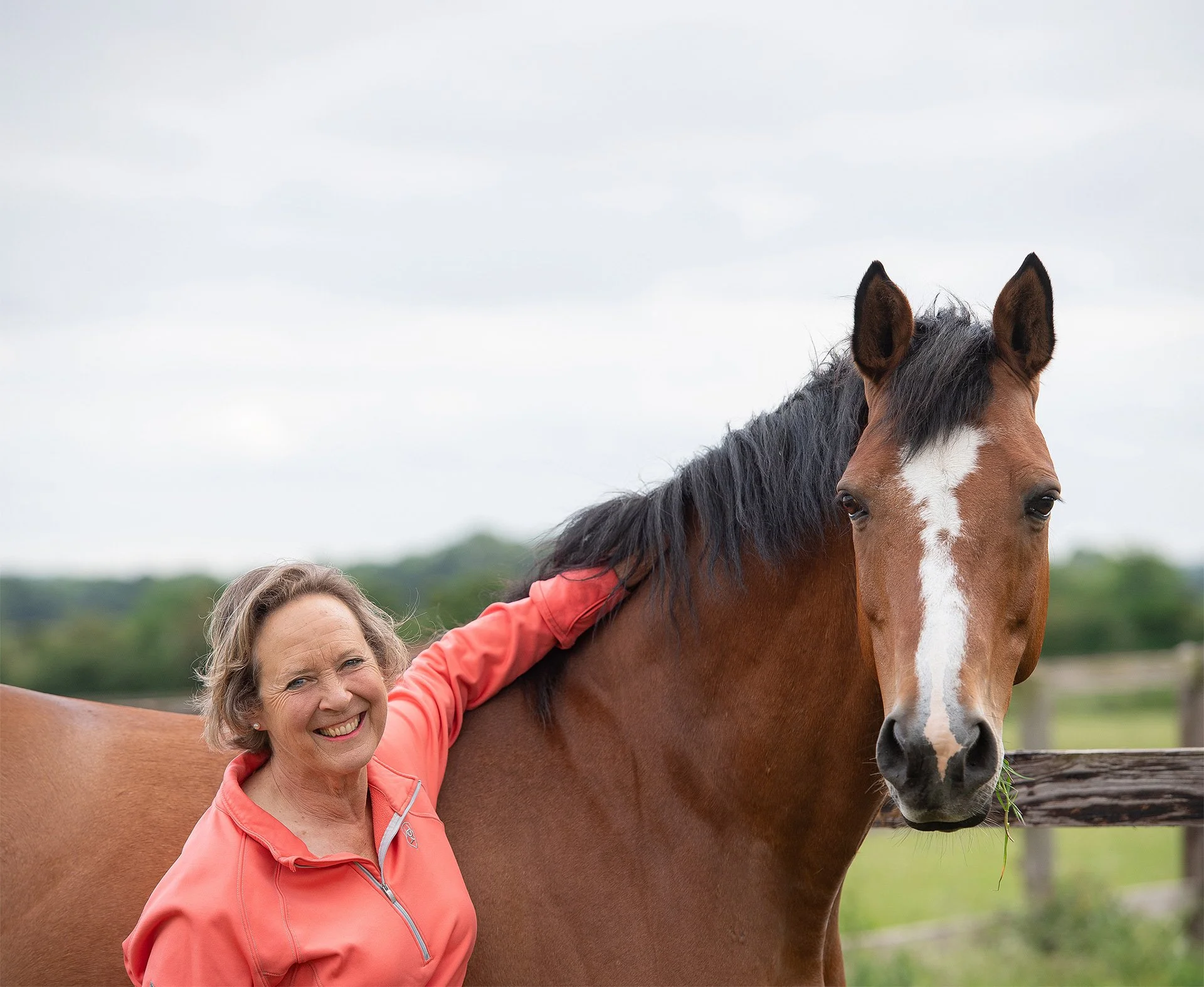
Caroline Spurrier bought Crow’s Hall in 2005 and began the long work of bringing it back to life. The extensive repair programme included re-roofing the house and removing unsympathetic late-20th-century additions.
As part of the restoration, the inner moat was landscaped with gardens designed by Xa Tollemache. The courtyard follows early foundations of the former Hall and south wing, while the knot garden to the north maps foundations discovered during the work.
Beyond the ring moat are further water structures connected with the 18th-century landscape and thought to have begun as mediaeval fishponds. Between the moats stands the 16th-century dovecote; to the south, the remarkable timber-framed Long Barn continues the story of the working estate.
The restoration has always been about continuity rather than reinvention: keeping the marks of the Hall’s long history while allowing Crow’s Hall to remain a private home and a place others can experience.

Sir Charles Gaudy
17th – 18th Century
The Stuart period
Inheritance, alteration and loss.
Sir Charles Framlingham’s son Clement predeceased him, and Crow’s Hall passed to his only daughter, Anne, who married Sir Bassingbourne Gawdy. Their second son, Charles, inherited the property. Following his death in 1628, it passed to his son and namesake, Charles Gawdy (1612–1650), and then to another Charles, born in 1635 and created First Baronet in 1661.
The estate was sold to John Pitt MP in 1694. Crow’s Hall appears to have been in a state of disrepair by this period: the Hall to the east and the south wing were demolished, while the west entrance was reduced to a single storey.
Those losses remain part of the story today. Foundations of the former Hall and south wing were later used to give structure to the courtyard and island gardens.
A LIVING PRIVATE HOME
Still first and foremost a Suffolk home.
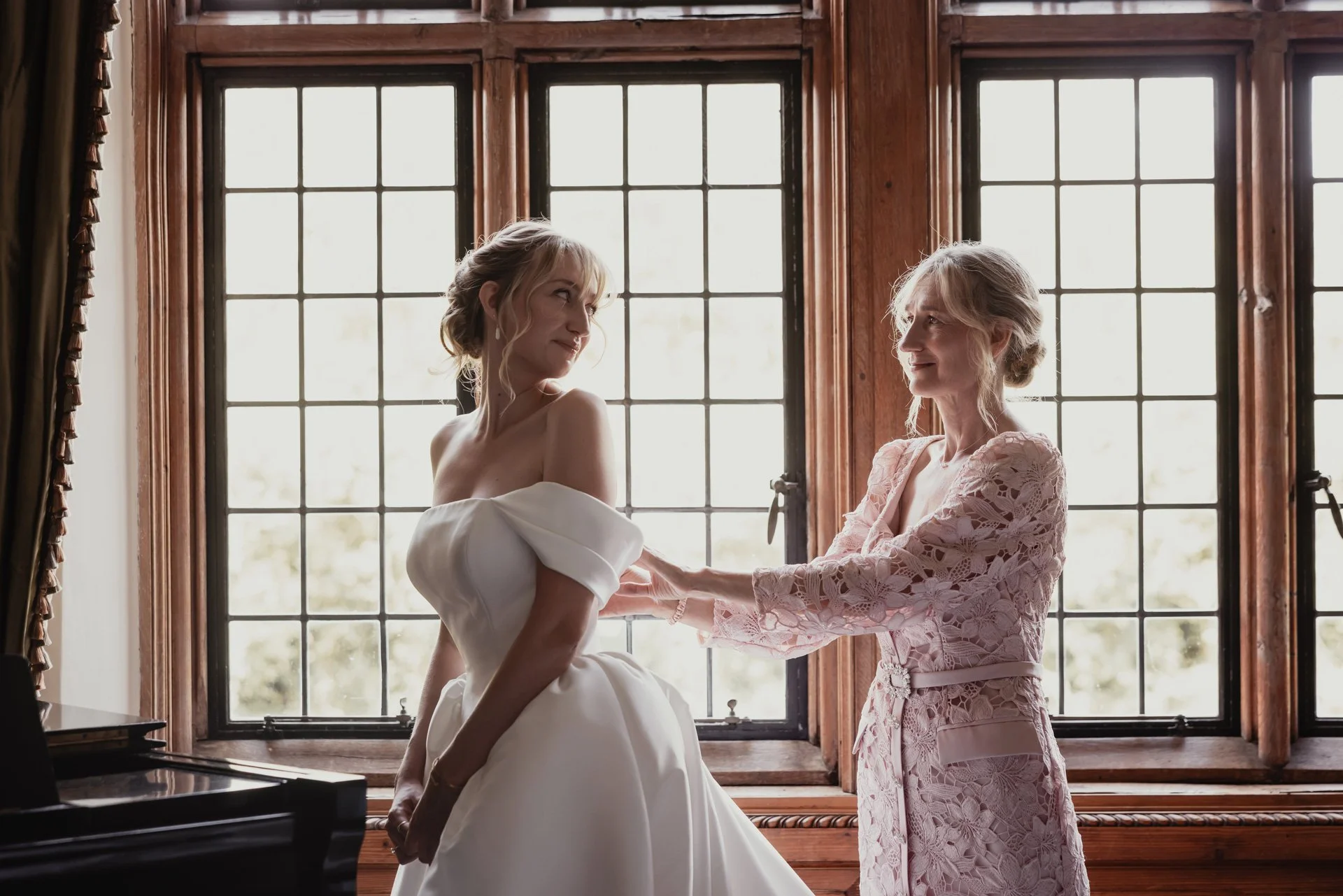
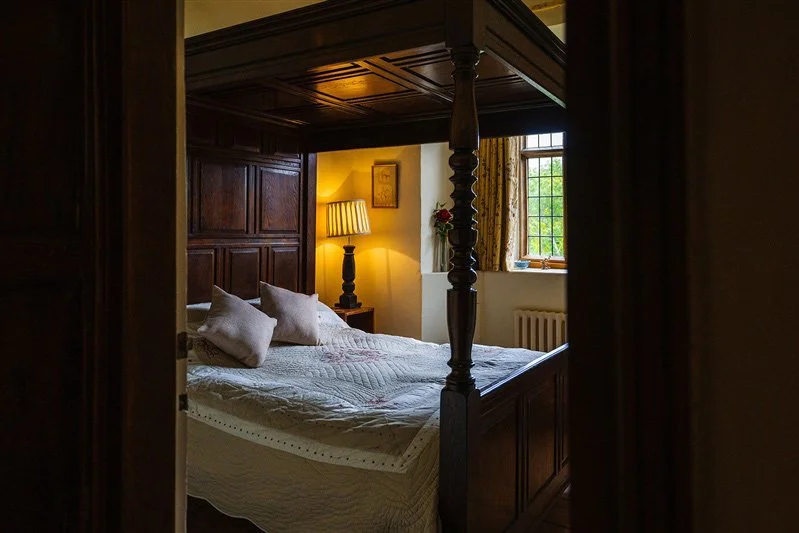
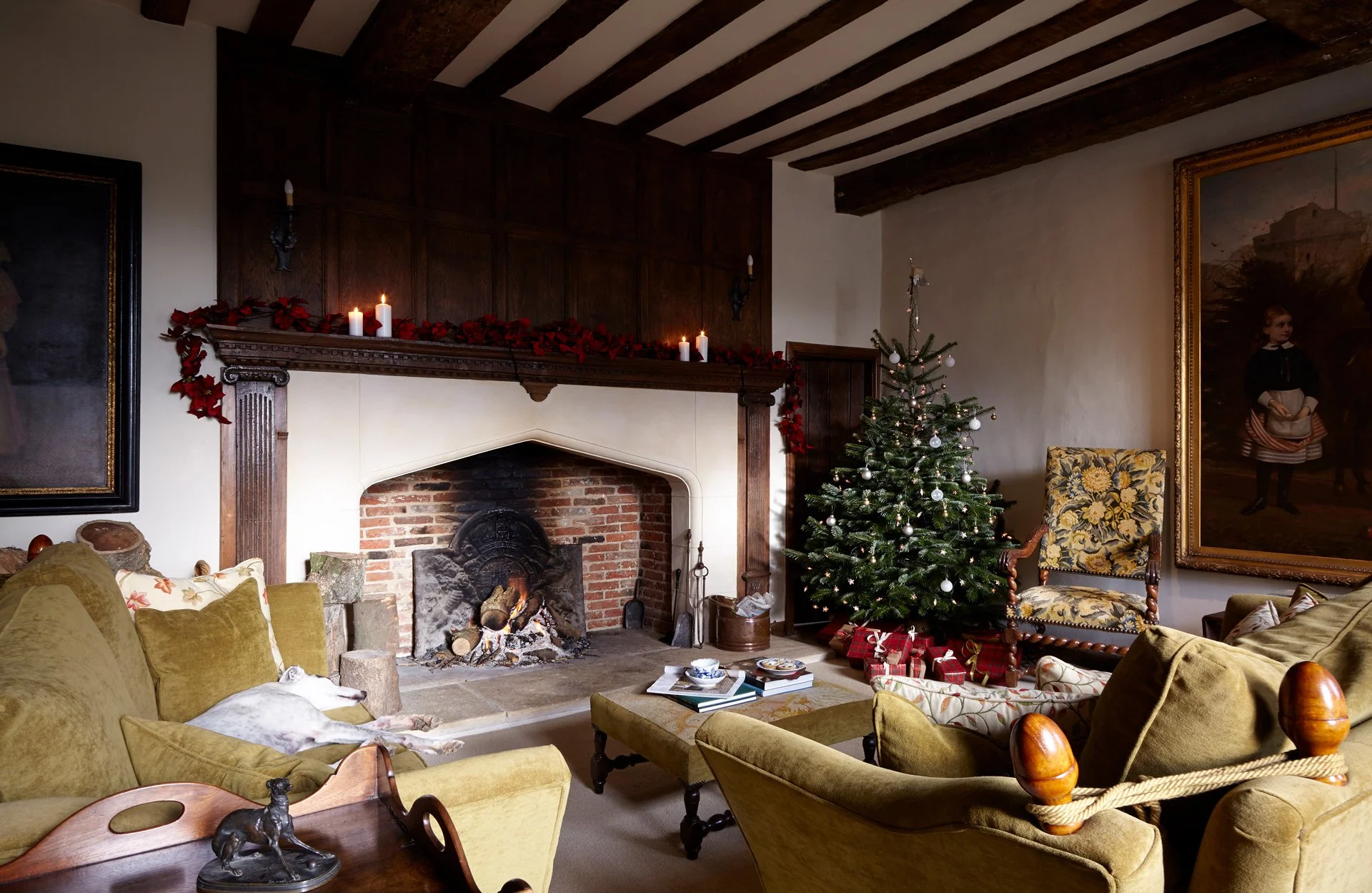
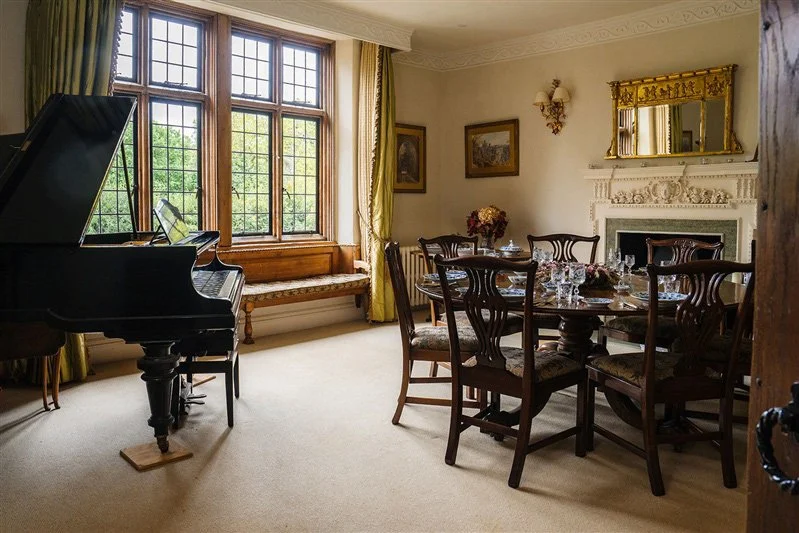
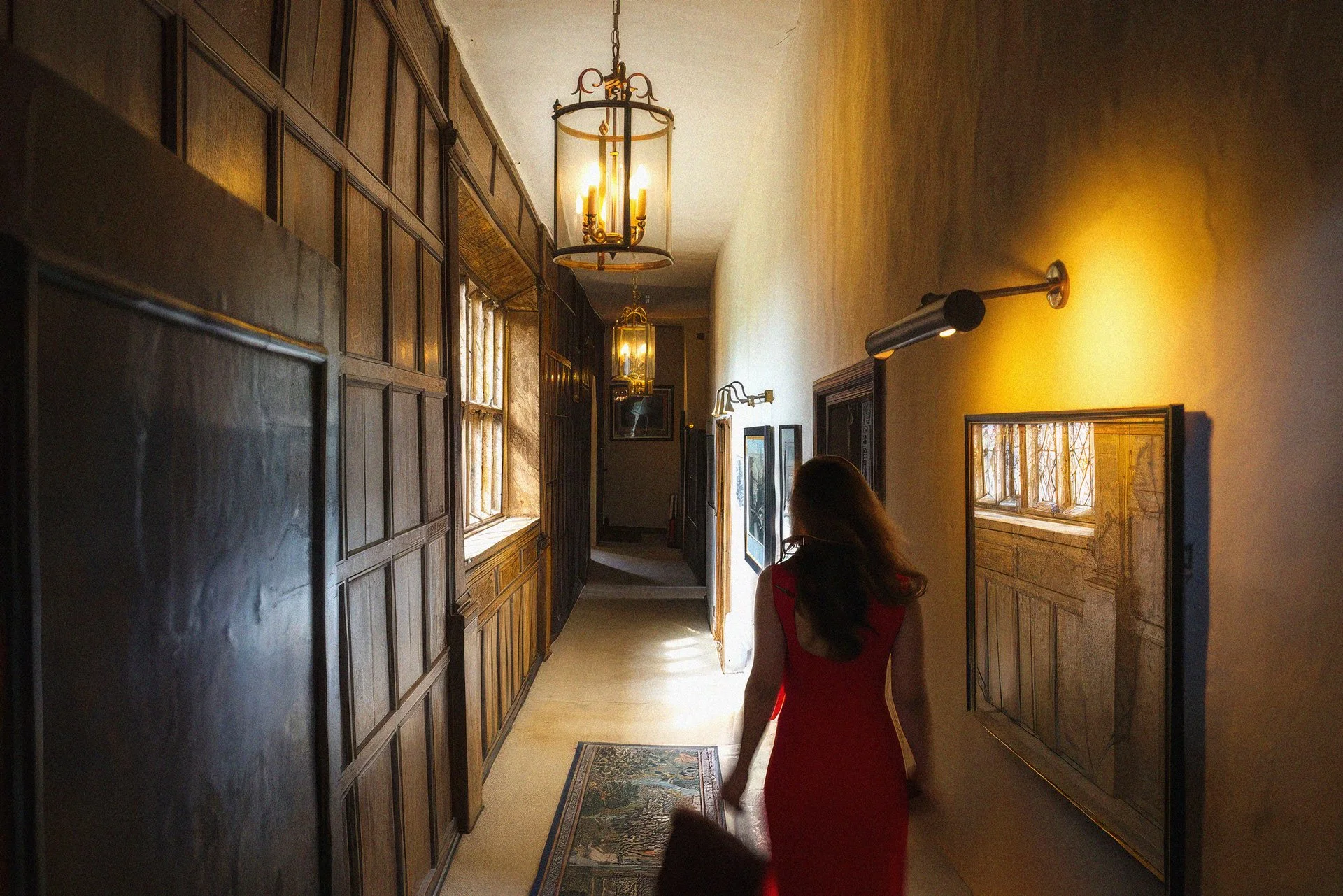
Crow’s Hall is not a museum piece or a country house polished into anonymity. Its historic rooms remain personal, warm and lived in: a home shaped over centuries and shared with others for only a small number of weddings, private stays and gatherings.
For a wedding, the Hall can become a private base for the couple and those closest to them – somewhere to arrive, prepare, gather, sleep and return to as the celebration moves through the gardens and Long Barn. For a private stay, the relationship becomes quieter and more domestic: a few unhurried days with the house, island gardens and surrounding estate.
Full bedroom, bathroom and household information can be found on Staying Here; the wider possibilities for a celebration are explored on Weddings.
We can not think of a more beautiful place to spend the happiest day of our lives. The welcome, the beauty of the Hall and grounds and care given to us…”
Caroline + Steven (Bride + Groom)

CONTINUE EXPLORING
From the Hall, the estate opens out.
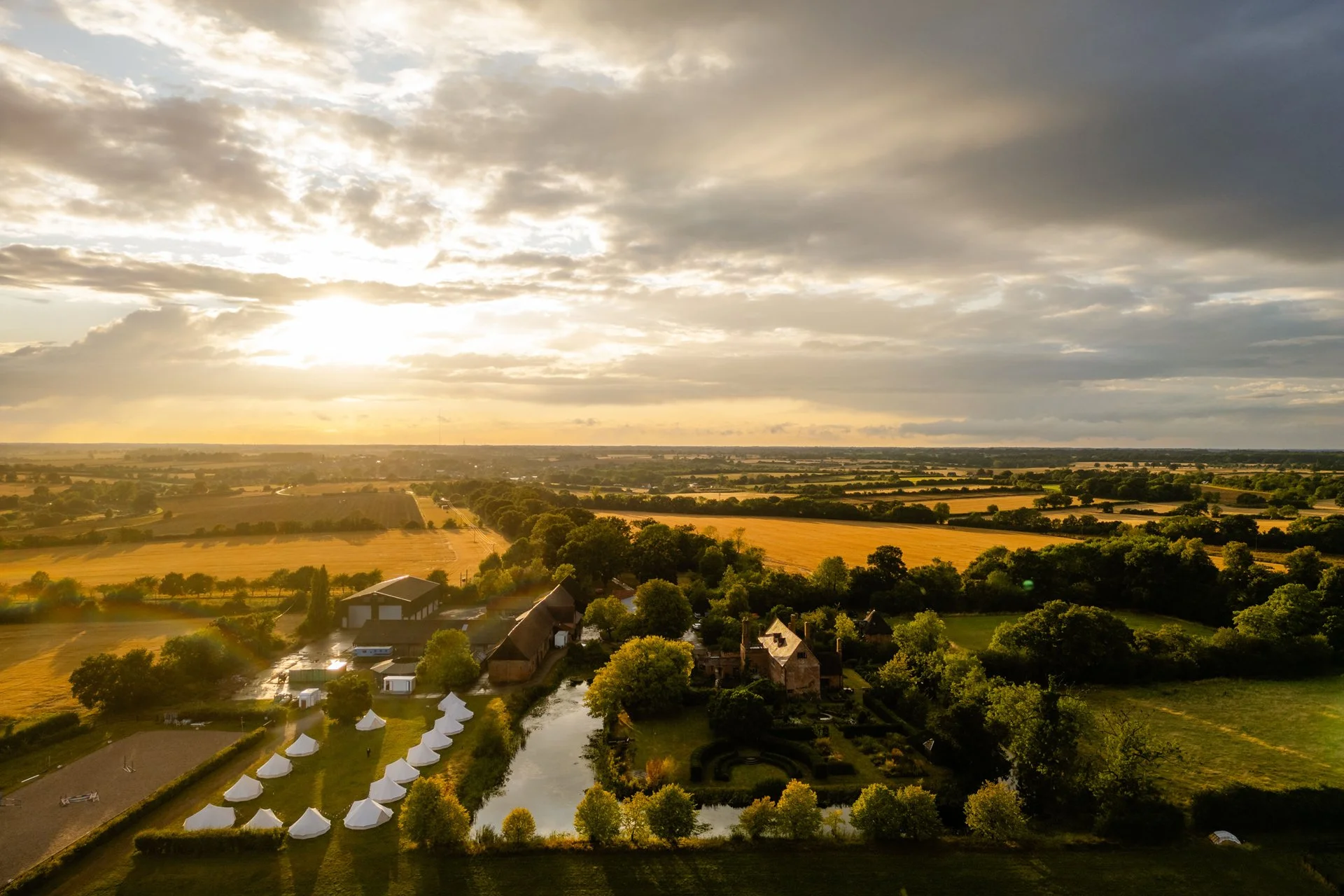
The Estate
First recorded by name in 1331, Crow’s Hall is a Grade II* listed, largely 16th-century moated manor house, approached across its brick bridge. Still Caroline’s private Suffolk home, it brings historic rooms and deeply personal character to weddings, gatherings and private stays.
The Island Gardens
Designed by Xa Tollemache during Caroline’s restoration of the estate, the island gardens use old foundations and brickwork to create a series of secluded outdoor rooms. Held within the water-filled moat, they include lawns, richly planted borders, a knot garden, amphitheatre and pool garden.
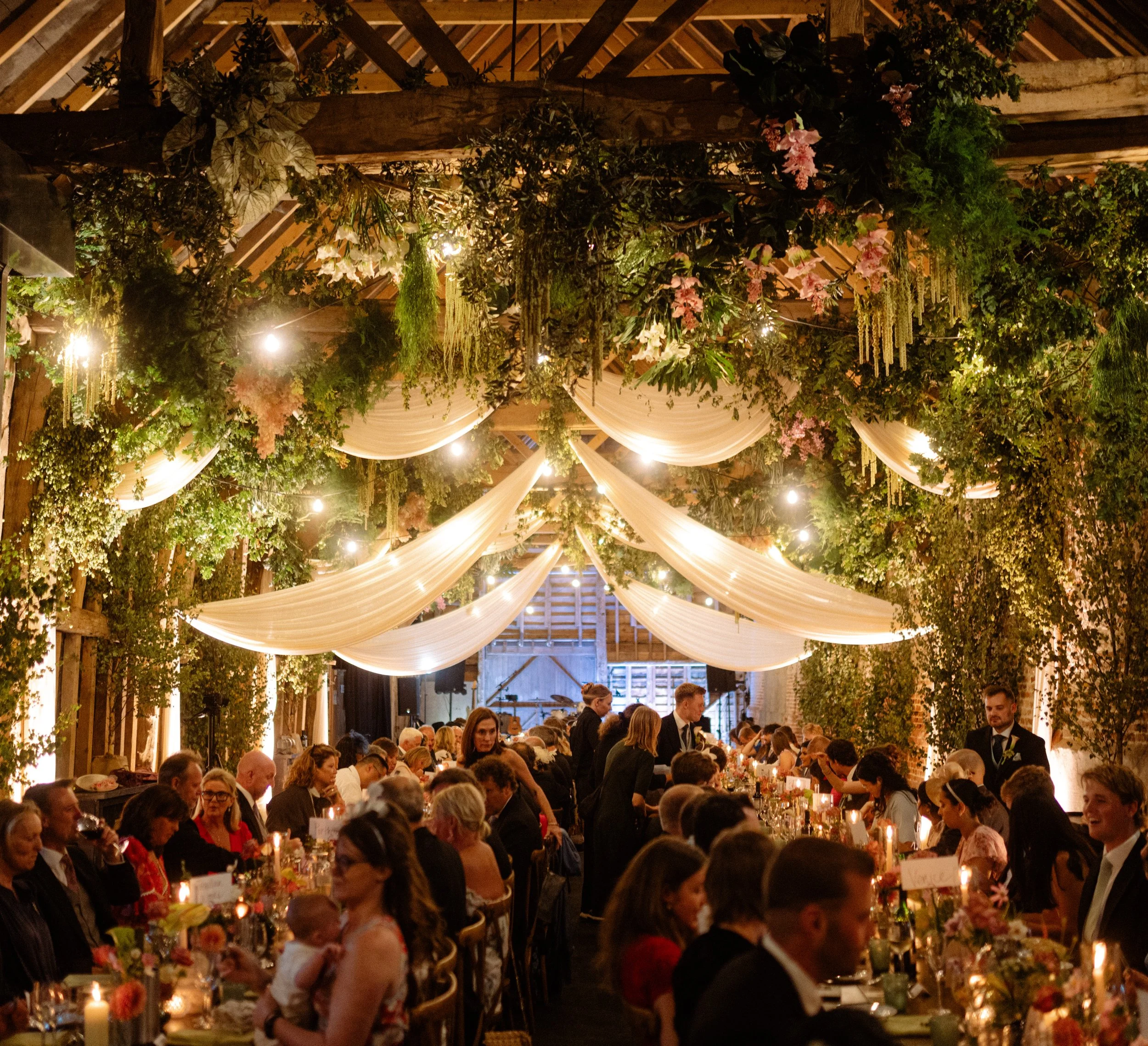
The Long Barn
Suffolk’s longest and one of its most authentically preserved timber-framed Tudor barns, the Long Barn was once a 16th-century granary. Its remarkable scale, acoustics and flexible open interior make it an atmospheric setting for ceremonies, dining, music, dancing and the later hours.

Marquees & Glamping
Beyond the moat, the wider estate offers space for sailcloth marquees, tipis, big tops and glamping. Celebrations can spread into the Suffolk landscape, while guests stay close by – creating the atmosphere of a private country gathering or temporary village around Crow’s Hall.

We cannot think of a more beautiful place to spend the happiest day of our lives.”
— J&K, BRIDE & GROOM
We have been able to give our daughter her dream wedding, and it has been a truly magical time.”
— A&N, BRIDES PARENTS
What a special time we had at Crow’s Hall! Your home is magical and you helped us create the most perfect wedding.”
— F&K, BRIDE & GROOM
From the first time we visited Crow’s Hall, we fell in love with its character and charm. It is a truly amazing venue with a remarkable history and outstanding grounds.”
— C&W, BRIDE & GROOM
Crow’s Hall is an absolutely beautiful corner of the world and a very special place.”
— H&A, BRIDE & GROOM
Thank you so much for your incredible hospitality. You put us immediately at ease and helped make our day magical from start to finish. Your house and gardens are amazing. Thank you from the bottom of our hearts. We will definitely be back to visit.”
— J&J, BRIDE & GROOM
Follow us on Instagram