THE ISLAND GARDENS
AT CROW’S HALL

A setting held by water
Suited to ceremony, drinks, photographs and the quieter movement of the day.
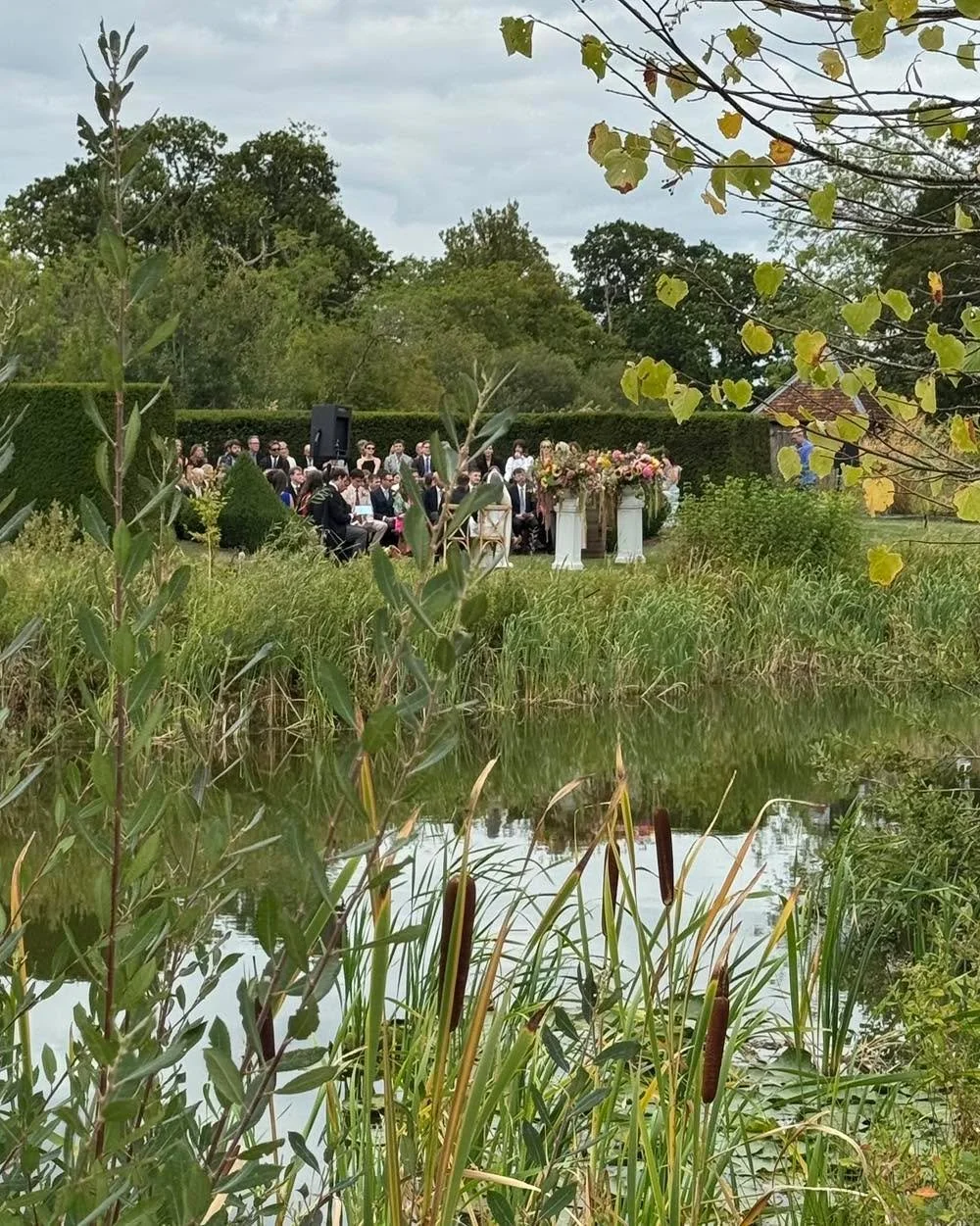
The island gardens sit within the main moat, gathered closely around the redbrick Hall and reached across the historic bridge. Water gives them privacy and pause; beyond it, the landscape opens into paddocks, meadow and long Suffolk views.
Designed by the award-winning garden designer Xa Tollemache - a near neighbour in Suffolk terms - during Caroline’s restoration of Crow’s Hall, the gardens use old foundations and fragments of the former house to create a sequence of outdoor rooms. Their structure is formal, their planting looser and more romantic, and every part remains connected to the Hall.

A GARDEN MADE FROM THE PAST
Old foundations, new garden rooms.
The gardens were designed in 2007 as part of the restoration begun after Caroline bought Crow’s Hall in 2005. Their layout follows foundations discovered around the house, including parts of the former Hall and south wing that were lost centuries earlier.
Old brickwork now forms raised beds, walls and boundaries, allowing the vanished structure to remain visible in another form. Lavender, roses, herbs, clipped yew and box, lawns, sculpture and water soften that history and make the island feel intimate rather than formalised.
Nothing has been imposed as a single grand garden. Instead, paths reveal one place after another: each with its own scale, planting, light and relationship to the house.

Climbing Rose (Mme. Caroline Testout)
The Island Gardens
A sequence of places to gather and pause.
Cross the bridge and pass through the Tudor redbrick gateway into a lavender-scented courtyard. From here, paths lead towards the more formal Pool Garden, a narrow lawned allée and the sunken grass amphitheatre at the far edge of the island.
Other rooms include a miniature Tudor-style knot garden, herb garden, potager, marquee lawn and moat-side jetty terraces. Some feel sheltered and close to the house; others turn outwards towards water and open countryside.
Together they give the gardens their particular rhythm. Guests can move naturally through the island rather than being held in one fixed place, while quieter corners remain for walking, reading, photographs or simply sitting beside the moat.
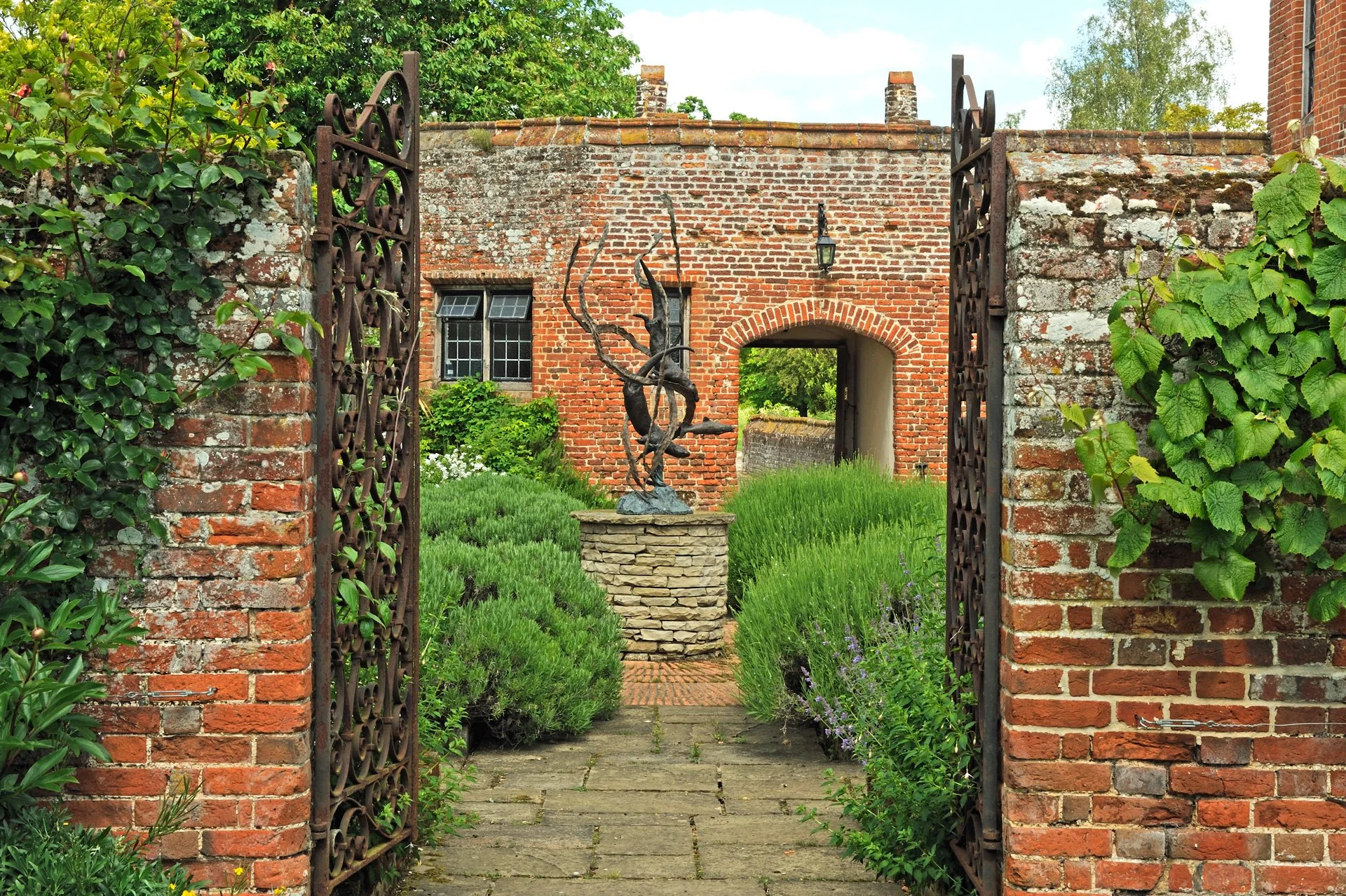
The Courtyard Garden
Planting, sculpture and old brick.
The courtyard garden occupies the site of the former south wing of the great Hall. Its circular paths, stone-flagged terrace and raised beds make it a sunny, sheltered place for receiving guests, while its generous planting keeps the atmosphere relaxed and almost cottage-like.
Towering lavender is joined by santolina, nepeta, rosemary and salvia, with clumps of iris, allium and euphorbia backed by lilies and delphiniums. Pale stone and old brick bring their own colour, alongside a mature magnolia, long-established acer and the pink climbing rose ‘Mme. Caroline Testout’ against the Hall wall.
At its centre, the wildlife sculpture ‘Two Against One’ by Cemmick and Wilder gives the courtyard a strong focal point without disturbing its domestic character.
Sculpture: “Two Against One” by Cemmick and Wilder
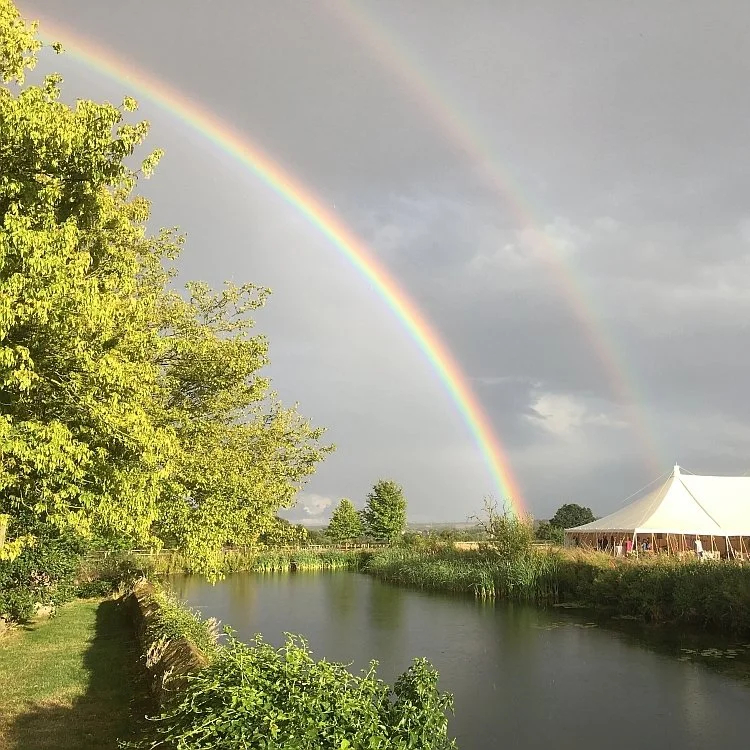
Double Rainbow over Crow’s Hall
Landscape, paddocks and old water
Beyond the island, the estate opens out.
Crow’s Hall stands at the top of a gentle rise, with views falling towards the valley of the River Deben, whose source lies nearby. The island gardens are open and sunny, while mature trees and buildings create pockets of shade and shelter.
Outside the main moat are further water structures, including old stew ponds where fish would once have been kept, and former orchard enclosures that have become wild meadow. Grassy paddocks extend beyond them, giving marquees and glamping room to sit within the estate without crowding the Hall and gardens.
Crops, pasture, wildflowers and pockets of woodland make the gardens feel elevated and elegant, yet completely at home in the working Suffolk landscape around them.

The fountain provides the Centerpiece for the formal garden
The Pool Garden
Formal in line, softer in planting.
Enclosed by yew hedging, the Pool Garden is centred on a raised round pool and fountain, surrounded by four box-edged beds. The geometry gives the garden clarity, while the planting continues the softer character of the courtyard.
Peonies, alliums, lilies and delphiniums bring colour and height through summer. Roses including ‘Winchester Cathedral’ and ‘William Shakespeare’ add a quiet nod to the age and character of the Hall without making the garden feel like a period reconstruction.

Beautiful Irises
Flora and fauna
A living landscape, changing with the seasons.
The approach to Crow’s Hall follows The Walk, a half-mile avenue of double-planted oaks, some between 200 and 300 years old. Wildflowers sit deep in the grass verges; woodpeckers cross the path; hedgerows carry birdsong and ducks gather around the old ponds.
Closer to the Hall, visiting swans glide around the moat. Moorhens nest beside banks of primroses and flag irises, while the estate’s colours shift from the fresh greens of spring to the deeper grasses and golds of late summer.
The life of the gardens is not arranged for effect. Voles, red valerian, water birds and, at times, a four-legged welcoming committee are simply part of the place.
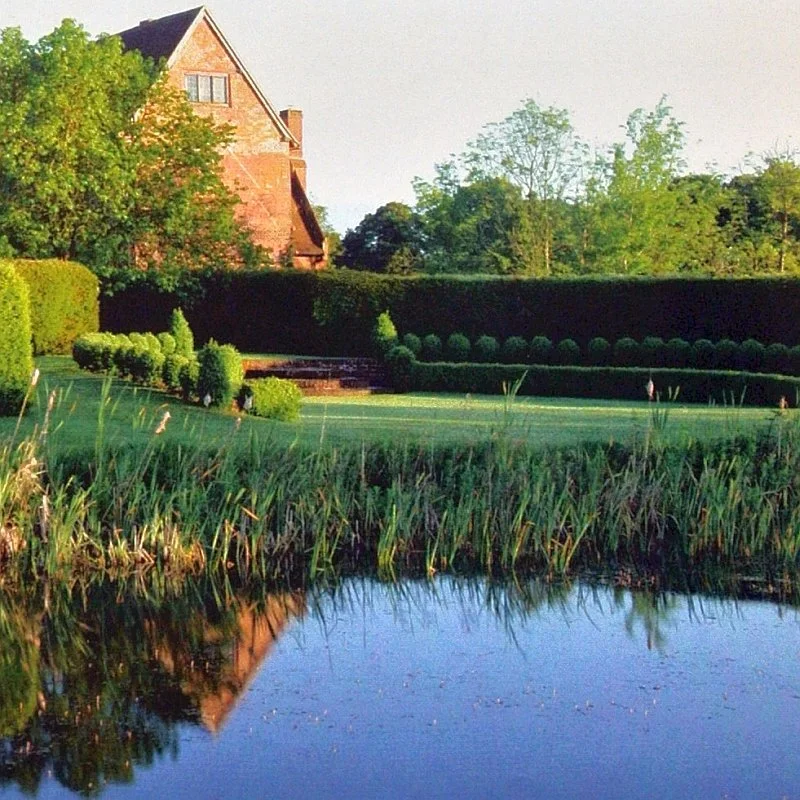
The Amphitheatre, a great place for large gatherings
The Amphitheatre
The landscape becomes the backdrop.
At the far end of the island gardens, the sunken semi-circular amphitheatre looks across the moat towards the rolling Suffolk countryside. Its central brick steps, curved retaining wall, clipped box and topiary give it a natural sense of occasion, while grass underfoot keeps it part of the wider landscape.
The amphitheatre has hosted occasional concerts and theatrical performances, as well as wedding blessings, speeches and personal gatherings. It is one of those places where the estate’s intimacy and openness meet: held by the garden, but looking far beyond it.
WEDDINGS AND STAYS IN THE GARDENS
More than a backdrop.
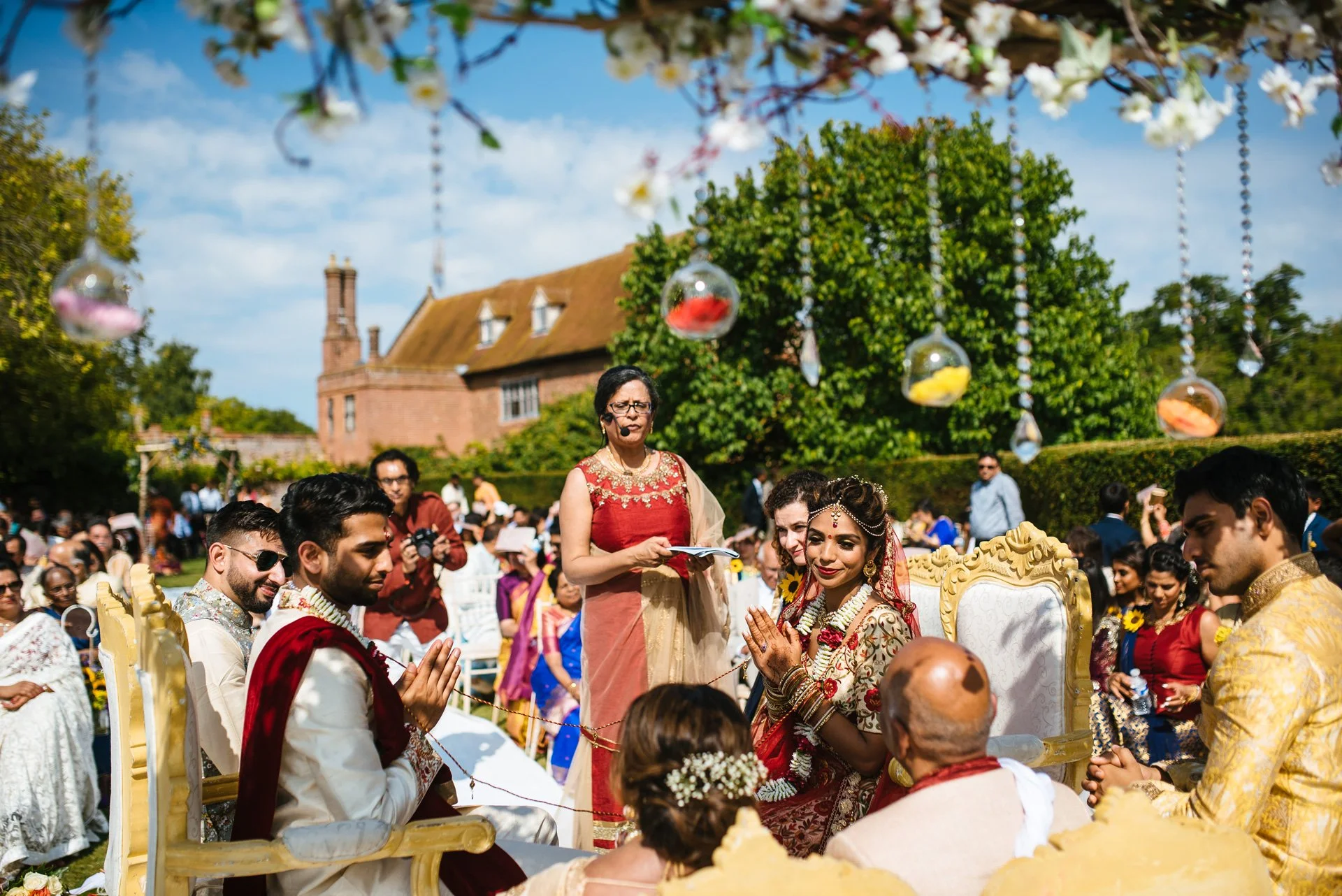
The gardens can hold many different parts of a wedding: guests arriving through the courtyard, a personal blessing or celebrant-led ceremony, drinks by the moat, photographs among the planting, speeches in the amphitheatre or a picnic before the celebration moves towards the Long Barn.
Their value is not simply visual. The different rooms give the day movement and pace, allowing lively moments and quiet ones to find their own place. For those staying in the Hall, the relationship is gentler still: morning coffee, an unhurried walk, a book in the shade or time beside the water after everyone else has gone.
CONTINUE EXPLORING
From garden rooms to Hall, barn and landscape.
Return to the Hall to discover how the house and gardens grew from the same history, continue towards the Tudor Long Barn, or step back to the Estate Overview to see how water, buildings and landscape connect.
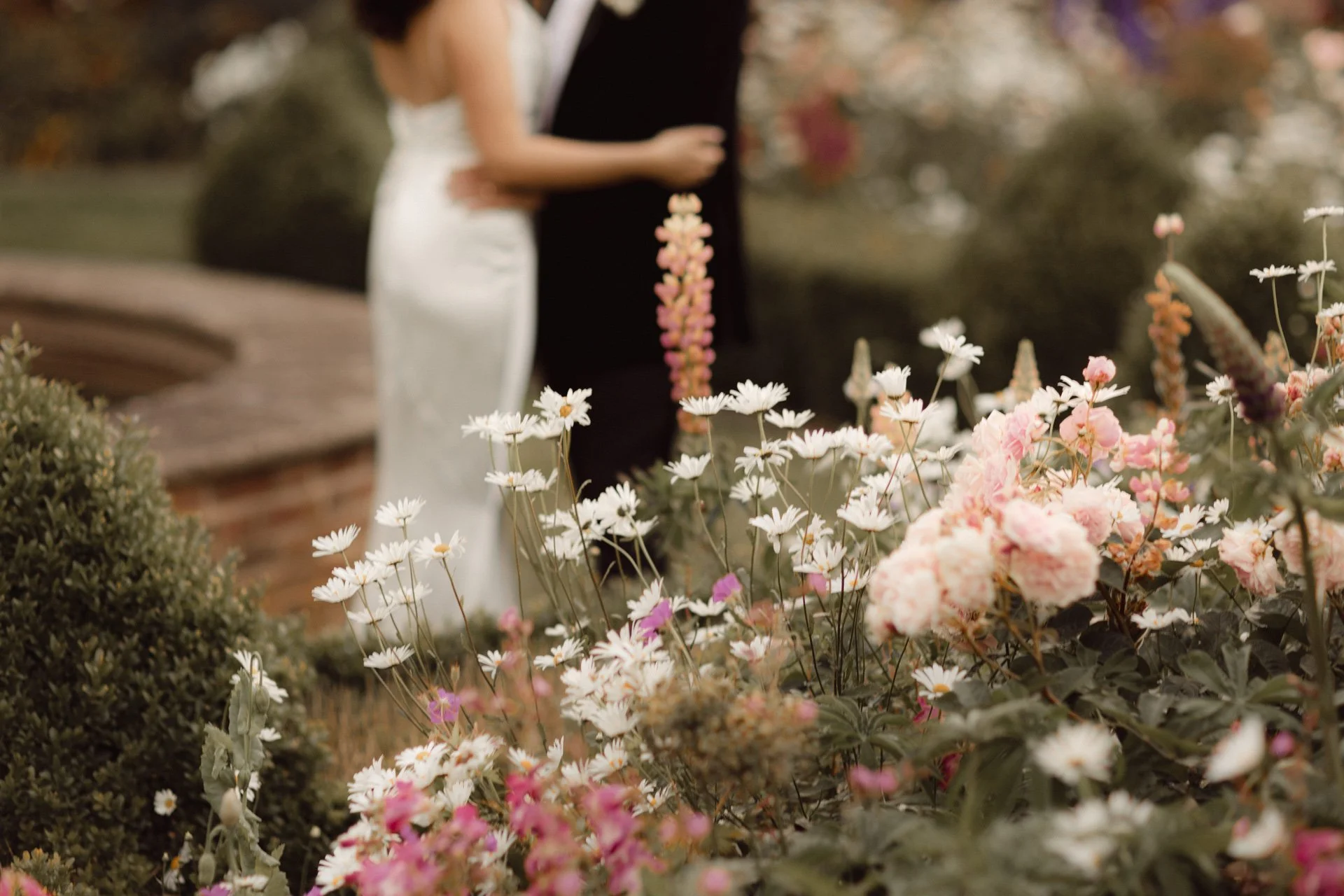

The amazing gardens and being able to have a picnic after the ceremony was our favourite moment.”
Kaycha + Tom

Follow us on Instagram